
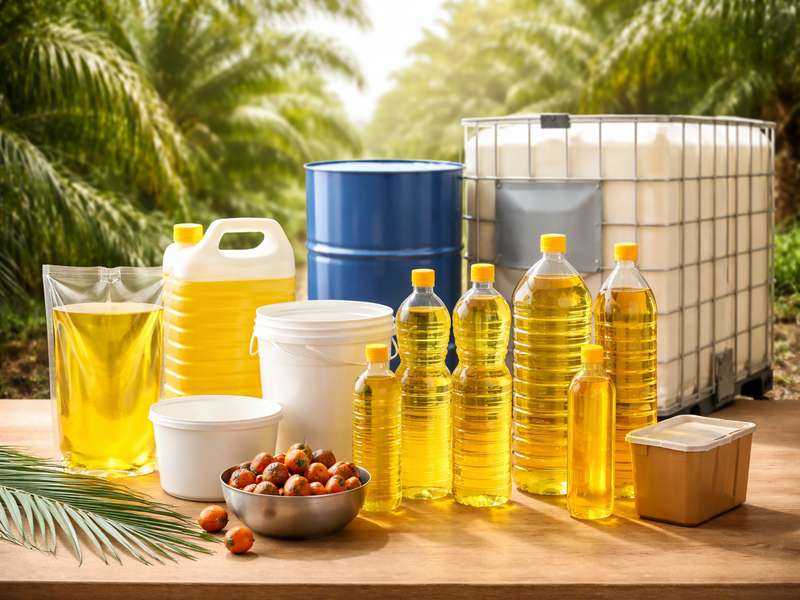
Custom Packaging Solutions for Palm Oil Products
Palm oil products serve many markets, from bulk industrial supply to retail packaging. Because they differ in viscosity, shelf life, application, and customer needs, packaging must be tailored rather than standardized. Custom packaging helps protect product quality, improve transport efficiency, enhance brand image, and suit different sales channels. Whether for crude palm oil, refined oil, palm olein, palm kernel oil, shortening, margarine, or other palm-based products, the right packaging affects storage, handling, and market performance. Why Custom Packaging Matters for Palm Oil Products Palm oil products are sold in many different forms and for many different purposes. Some are exported in bulk to food processors, while others are packed in small retail containers for supermarkets. Some are intended for industrial frying operations, while others are used in cosmetics, bakery production, or household cooking. Custom packaging matters because it helps producers align the package with the product’s actual use conditions. Key reasons custom packaging is important: Product protection Helps prevent contamination during storage and transportation. Reduces exposure to moisture, dust, oxygen, and external odors. Supports longer shelf stability for finished palm oil products. Market adaptability Allows brands to offer different pack sizes for different customers. Supports retail, wholesale, foodservice, and industrial applications. Makes it easier to enter local and export markets. Operational efficiency Improves filling, sealing, palletizing, and shipping performance. Reduces leakage and handling damage during logistics. Supports automated packaging line integration. Brand value Enhances shelf appeal through attractive container design. Creates a stronger identity through customized labels and printing. Helps brands stand out in competitive edible oil markets. Main Palm Oil Products That Require Custom Packaging Palm oil is not sold in only one standard form. Different palm oil derivatives require different packaging structures depending on temperature sensitivity, end use, and handling conditions. Common palm oil product categories: Crude palm oil (CPO) Usually handled in bulk for further refining. Requires industrial-scale storage and transportation solutions. Refined palm oil Often packed for food manufacturing and foodservice applications. May be sold in medium or large containers. Palm olein Commonly used as cooking oil. Frequently packed in retail bottles, jerry cans, or pouches. Palm kernel oil Used in food, soap, cosmetics, and chemical industries. May require packaging suited for both food-grade and industrial uses. Shortening and margarine Need packaging that supports semi-solid or solid fat handling. Often packed in tubs, cartons, lined boxes, or pails. Palm-based specialty products Include bakery fats, confectionery fats, or customized blends. Often require tailored packaging dimensions and barrier performance. Common Custom Packaging Types for Palm Oil Products Choosing the correct packaging format depends on product volume, customer type, storage conditions, and distribution channel. Common Packaging Types for Palm Oil Products Packaging Type Typical Capacity Common Applications Main Advantages PET Bottle 250 ml to 5 L Retail cooking oil Lightweight, transparent, consumer-friendly HDPE Bottle/Jerry Can 1 L to 25 L Household, commercial, foodservice Strong, durable, leak-resistant Stand-Up Pouch 500 ml to 5 L Retail and flexible packaging markets Lightweight, lower material use, attractive display Tin Can 1 L to 20 L Premium edible oils, export markets Good protection, strong appearance Plastic Pail/Bucket 5 kg to 25 kg Shortening, margarine, bakery fats Easy handling for semi-solid products Drum 180 kg to 220 kg Industrial palm oil supply Suitable for bulk distribution IBC Tank 500 L to 1,000 L Bulk liquid transport Efficient storage and shipping Flexitank 10,000 L to 24,000 L Large-volume export logistics High transport efficiency for bulk liquids Typical packaging options include: Retail bottles Suitable for cooking oil brands sold in supermarkets. Common materials include PET and HDPE. Available in custom shapes, neck sizes, and cap types. Jerry cans Popular for medium-volume sales. Often used for foodservice and commercial kitchens. Easy to stack, carry, and pour. Flexible pouches Increasingly used for cost-sensitive and convenience markets. It can reduce packaging weight and transport cost. Suitable for refill packaging concepts. Metal tins Often used for premium or export-oriented edible oil products. Offer a more traditional and sturdy image. Can offer strong defense against outside pressure. Buckets and pails Used for shortening, margarine, and semi-solid palm products. Easy for industrial users to scoop and portion. Can be produced with tamper-evident lids. Bulk containers Include drums, IBCs, and flexitanks. Ideal for industrial supply chains and international shipping. Reduce manual handling and improve transport efficiency. How to Match Packaging with Different Market Segments A good custom packaging solution begins with understanding who will use the product and how it will be sold. Retail consumer packaging Retail packaging must balance function and shelf appeal. Important features: Easy pouring and resealing Attractive bottle design Clear label area for branding Consumer-friendly sizes such as 1 L, 2 L, 3 L, and 5 L Suitable packaging: PET bottles HDPE bottles Stand-up pouches Printed shrink sleeves or pressure-sensitive labels Foodservice and commercial packaging Restaurants, catering businesses, and food processing users often need larger pack sizes with better handling durability. Important features: Strong handles for carrying Easy dispensing Stackable design Reliable sealing during repeated handling Suitable packaging: 10 L to 25 L jerry cans Medium pails Large tins Packaging for export and industry Safety, economy, and bulk handling system compatibility are top priorities for industrial clients. Important features: High structural strength Good transport utilization Pallet efficiency Compatibility with pumps, valves, or decanting systems Suitable packaging: Steel drums Plastic drums IBC tanks Flexitanks Packaging Material Selection for Palm Oil Products Different materials provide different benefits in terms of weight, strength, appearance, and chemical compatibility. Packaging Material Comparison for Palm Oil Products Material Common Use Advantages Limitations PET Retail bottles Clear appearance, lightweight, cost-effective Less suitable for very high heat conditions HDPE Bottles, jerry cans Strong, impact-resistant, opaque protection Less premium visual effect PP Caps, tubs, pails Good rigidity, useful for semi-solid products Limited transparency Metal Tinplate Tins, cans Durable, premium look, good protection Heavier, higher material cost Steel Drums High strength for bulk logistics Heavier and more expensive to transport Multi-layer Film Pouches Flexible, lightweight, printable Requires correct sealing and puncture control Material selection should consider: Product state Liquid