
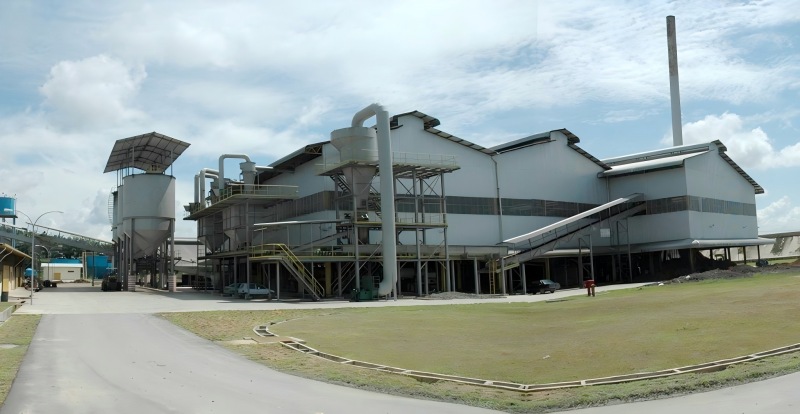
As global palm oil demand grows, competition has intensified. Modern mills now compete not only on capacity but also on customized design and engineering that enhance efficiency, quality, sustainability, and profitability. Whether building a new plant or upgrading an existing one, understanding customization options is key to meeting specific operational and market goals.
Capacity and Scalability Customization
The first and most basic level of customization for any palm oil mill is its processing capacity. Mills vary from small community operations to large industrial complexes serving global markets.
Capacity Planning Options
| Capacity Type | Daily FFB Throughput | Target Market |
| Small-Scale | 10–30 tons | Local/coop producers |
| Medium-Scale | 30–80 tons | Regional commercial supply |
| Large/Industrial | 80–300+ tons | Major buyers, exporters |
Owners can choose capacities based on FFB availability, market demand, logistics, and budget. Scalability options — such as modular design — make it easier to expand operations in the future without redesigning the entire plant.
Future Scalability Features
- Modular processing units
- Expandable conveyor systems
- Provision for additional presses and clarifiers
- Pre-planned space allocation for future machinery
By planning scalability from the beginning, plants reduce future downtime and installation costs as production demands grow.
Customization of Processing Technologies
Different palm oil producers have different priorities: some focus on maximizing oil yield, others on processing speed, product quality, energy efficiency, or a combination of these. Customizing processing technology is a core factor in meeting these priorities.

Sterilization Systems
Sterilization is essential for stopping enzyme action and loosening fruit from bunches.
| Sterilizer Type | Key Features | Best Use Case |
| Batch Sterilizer | Lower cost, simple | Small-medium mills |
| Continuous Sterilizer | High throughput | Industrial plants |
| Steam Recycling Systems | Energy saving | Energy-efficient operations |
Plants can choose advanced sterilization systems with steam recovery, automated control, or variable speed conveyors based on throughput and energy considerations.
Digestion and Pressing Systems
The design of digestion and pressing equipment heavily impacts oil extraction efficiency and fiber quality.
| Technology | Custom Features | Benefit |
| Traditional heated digester | Manual control | Lower cost |
| High-Speed Heater | Uniform heat, forced circulation | Higher extraction efficiency |
| Twin-Screw Press | Gentle pressing | Better fiber quality |
| Hydraulic Press | Simple, low maintenance | Cost-effective for small plants |
Advanced designs, such as twin-screw presses with automated load control, optimize oil recovery and dramatically affect plant profitability.
Clarification and Filtration Customizations
Clarification determines oil purity and affects downstream refining.
| Clarification Solution | Custom Option | Result |
| Gravity tanks | Basic settling | Lower throughput |
| Stack-centrifuges | High speed | Improved separation |
| Automated skimming/decanter systems | Feedback control | Stable product quality |
Customization may include multiple stages of centrifugation, automated controls, and enhanced filtration to tailor oil quality for premium buyers.
Automation and Control Systems
Modern palm oil plants increasingly use automation for safety, consistency, and efficiency.
Levels of Automation
| Level | Description | Example Features |
| Manual | Human input at all stages | Local control panels |
| Semi-Automated | Automatic in stages | Programmable logic controllers (PLCs) |
| Fully Automated | Minimal human intervention | SCADA with remote monitoring |
Control System Custom Options
- SCADA (Supervisory Control and Data Acquisition): Real-time performance tracking and alerts
- Automated Batch Sequencing: Optimizes sterilization and pressing sequences
- Remote Monitoring: Operators track performance via mobile/desktop
- Quality Control Integration: Sensors for moisture, impurities (solid content)
Custom control systems improve reproducibility, reduce human error, and allow plant owners to benchmark performance data for continuous improvement.
Environmental Customizations
Environmental compliance is critical for long-term legality and community relations. Modern palm oil plants increasingly integrate solutions that reduce their environmental footprint.
Wastewater Treatment Customization
Processing palm oil generates wastewater (“palm oil mill effluent”, POME) that must be treated before discharge.
| Treatment System | Custom Feature | Benefit |
| Anaerobic Digester | Biogas recovery | Energy generation |
| Aerobic Treatment | Oxygenation | Lower BOD/COD |
| Membrane Filtration | Fine particle removal | Higher quality effluent |
Some plants include biogas capture systems capable of generating electricity or heat, reducing reliance on external energy.
Solid Waste Management
| Solid Waste Type | Custom Disposal/Reuse |
| Empty fruit bunches | Mulch, compost |
| Fibers | Animal feed, biomass fuel |
| Shells | Boiler fuel |
Customization can include pelletizers, composters, and biomass boilers, turning waste into revenue streams or cost savings.
Product Line and Output Customization
Palm oil isn’t just crude oil — customized plants can be set up to produce multiple palm products.
Multiple Product Streams
| Output | Description |
| Crude Palm Oil (CPO) | Primary product |
| Palm Kernel Oil (PKO) | Secondary product from kernels |
| Palm Kernel Cake | Feedstock form |
| Palm Oil Fractions | Stearin, olein (for food & industrial use) |
A facility can include additional units to fractionate oil into high-value derivatives — for cooking oils, margarine bases, cosmetics, or industrial lubricants.
Layout and Infrastructure Customization
The physical arrangement of equipment affects workflow efficiency, safety, and expansion potential.
Plant Layout Options
- Linear Flow Layout: Simplest and lowest cost
- U-Shaped Layout: Supports maintenance access
- Modular Layout: Future-ready for expansion
Infrastructure Considerations
- Covered conveyor systems for FFB handling
- Heavy-duty floors for high-capacity presses
- HVAC systems in enclosed control rooms
- Fire safety systems
Infrastructure can be customized based on local weather conditions, worker safety needs, and expansion plans.
Energy and Utility Customization
Energy costs represent a significant portion of mill operating expenses. Custom solutions focus on efficiency and alternative sources.
Boiler and Steam Systems
| Option | Description |
| Conventional Boiler | Standard steam generator |
| Bagasse/Biomass Boiler | Uses shell/fiber waste |
| High-Efficiency Boiler | Lower fuel use |
Plants can be customized with biomass boilers that burn waste fiber and shells to generate the steam needed for sterilization, reducing fossil fuel costs.
Renewable Energy Integration
| Energy Source | Application |
| Solar Panels | Auxiliary power |
| Biogas Generators | Heat and electricity |
| Wind Turbines | Supplemental energy |
Renewable integrations reduce carbon footprint and open doors to green certifications and incentives.
Quality Assurance Customizations
Product quality dictates market access and price.
Quality Monitoring Equipment
- Inline moisture sensors
- Real-time impurity detectors
- Automated sampling systems
- Laboratory integration with SCADA
Certifications Support
Custom solutions can include design and documentation processes aligned with:
- ISO 9001 (Quality Management)
- ISO 14001 (Environmental Management)
- RSPO/ISPO/MSPO (Sustainability standards)
These certifications enable exports and premium pricing.
Safety and Workforce Customizations
Worker safety is a legal and ethical imperative.
Safety System Integrations
- Emergency shutdown systems (ESD)
- Gas leak detectors
- Pressure relief valves
- Fire suppression systems
Training and Ergonomics
Customizations may include:
- Operator dashboards with alerts
- Automatic lock-out/tag-out systems
- Hazard signage and restricted access areas
Training programs can be integrated into the commissioning phase, ensuring workers understand safe operations and maintenance.
Logistics and Supply Chain Customization
Efficient inbound and outbound logistics reduce cost and improve responsiveness.
Inbound Logistics
- Covered FFB storage
- Weighbridge integration
- FIFO systems for fresh fruit management
10.2 Outbound Logistics
| Logistics Option | Custom Scope |
| Bulk oil tanks | Large storage capacity |
| ISO tank containers | Export ready |
| Drum filling stations | Smaller commercial supply |
Automation in packaging and scheduling improves turnaround time and reduces manual errors.
Digitalization and Smart Plant Customization
Industry 4.0 technologies provide new opportunities for performance improvement.
IoT and Sensors
- Predictive maintenance using vibration/temperature sensors
- Yield tracking sensors
- Networked production data
11.2 Digital Twins and Simulation
A digital twin is a virtual model of the plant used for:
- Process optimization
- Training simulation
- What-if analysis
- These tools help operators improve efficiency and reduce downtime.
Cost Implications of Customization
Custom solutions offer benefits, but they also affect investment and operating costs.
Comparison of Customization Levels
| Customization Level | CapEx Impact | OpEx Impact | ROI Timeline |
| Standard | Low | Moderate | 5-7 yrs |
| Semi-Customized | Moderate | Lower | 4-6 yrs |
| Fully Customized | High | Lowest | 3-5 yrs |
Higher customization generally increases initial investment, but reduces operational costs and improves market positioning and product value.
Tailoring for Strategic Advantage
Palm oil production is no longer one-size-fits-all. Successful producers customize plants to improve performance, lower costs, enhance quality, and meet environmental and social standards. Options ranging from process technology to automation and digitalization help align facilities with business goals and market demands.
When selecting upgrades, owners should weigh upfront costs against long-term benefits. Smart customization can turn a basic plant into a competitive, future-ready facility with higher margins, better quality, and reduced environmental impact.