
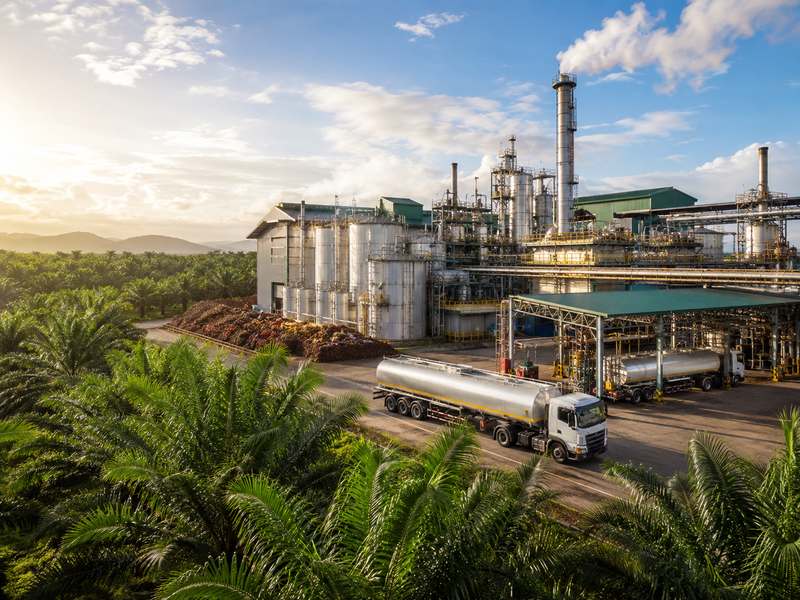
How B50 Biodiesel Policy Drives Demand for Palm Oil Processing Equipment
Indonesia’s B50 biodiesel policy is more than an energy policy. It is also a strong market signal for palm oil mills, refinery operators, equipment investors, and suppliers of palm oil processing equipment. Indonesia’s Ministry of Energy and Mineral Resources claims that the government intended to make B50 biodiesel mandatory starting on July 1, 2026. B50 refers to a fuel blend containing 50% palm oil-based biodiesel and 50% conventional diesel, following earlier biodiesel programs such as B20, B30, and B40. For the palm oil industry, this means one thing clearly: demand for stable, high-quality, and large-volume crude palm oil supply will continue to grow. As biodiesel blending moves from B40 to B50, palm oil production lines need to support higher output, better oil quality, and more efficient processing. B50 Creates a Stronger Link Between Energy and Palm Oil Food, oleochemicals, cosmetics, and industrial items have traditionally used palm oil. With B50, palm oil becomes even more important as a national energy feedstock. The Indonesian government expects B50 to reduce dependence on imported diesel and strengthen national energy security. The same official announcement also stated that B50 could significantly reduce diesel imports and may even remove the need for certain types of diesel imports if the program runs well. This policy direction changes how palm oil mills should think about future investment. A mill is no longer only serving food oil markets. It might also join a larger supply chain for biodiesel. That is why demand is expected to grow not only for simple palm oil machines, but also for complete palm oil processing equipment, palm oil refinery equipment, storage systems, clarification equipment, kernel recovery equipment, and turnkey palm oil production line solutions. Key Data Behind the B50 Policy The B50 program is supported by several important economic, environmental, and industrial targets. These numbers help explain why equipment demand may rise in the coming years. Data Point Official Figure What It Means for Palm Oil Equipment Demand B50 launch target July 1, 2026 Palm oil mills may need faster capacity upgrades before demand increases further. Biodiesel blend 50% palm oil-based biodiesel + 50% diesel More palm oil feedstock is required for fuel blending. Estimated added value Rp24.68 trillion More value may move into the palm oil processing chain. Employment impact More than 2.2 million people A larger supply chain needs more stable production systems. Emission reduction 46.72 million tons of CO2 equivalent Cleaner production and waste treatment equipment become more important. Foreign exchange savings Rp157.28 trillion Domestic feedstock processing becomes strategically valuable. 2026 biodiesel allocation Around 17.60 million kL High-volume processing and storage systems become more important. Distribution support 26 biodiesel producers, 32 fuel companies, 85 delivery points A stable upstream palm oil supply is needed to support national distribution. These figures come from Indonesia’s official B50 announcement, which also stated that biodiesel distribution had reached around 3.90 million kL by April 13, 2026, equal to 24.9% of the annual allocation. More Biodiesel Means More Pressure on CPO Supply Biodiesel production starts with feedstock. In Indonesia, that feedstock is mainly palm oil. When the blending rate increases from B40 to B50, the biodiesel industry needs more palm oil-based input. Reuters reported that Indonesia’s B50 program could increase biodiesel demand to around 17.6 million kiloliters in 2026, while a full B50 requirement could lift annual demand to about 20.1 million kiloliters. The production of crude palm oil is directly impacted by this. Mills must process fresh fruit bunches quickly, reduce oil loss, control moisture and impurities, and maintain stable CPO quality for downstream refining and biodiesel conversion. For buyers, this means old or low-efficiency palm oil equipment may become a bottleneck. A single weak point in sterilization, threshing, pressing, clarification, or storage can reduce yield and affect the quality of the final feedstock. Testing Results Make Fuel Quality More Important The official B50 announcement also mentioned that technical testing had been carried out on different vehicles and operational equipment. These included transportation vehicles, mining heavy equipment, excavators, ships, trains, agricultural machines, and other diesel-powered equipment. This matters for palm oil processing because biodiesel quality is not only determined at the final blending stage. It starts much earlier. If CPO contains too much moisture, sludge, free fatty acids, or unstable impurities, downstream refining becomes more difficult. For biodiesel-grade feedstock, clean oil separation, stable heating, correct storage, and efficient purification are essential. This is why palm oil clarification equipment, centrifuges, settling tanks, oil purification systems, and heated storage tanks may receive more attention from investors. Better upstream processing helps provide a more stable raw material base for biodiesel producers. Palm Oil Mills Need Higher Processing Efficiency In a normal palm oil production line, fresh fruit bunches must move through several stages: reception, sterilization, threshing, digestion, pressing, clarification, kernel recovery, storage, and sometimes refining. Key equipment usually includes weighbridge systems, loading ramps, sterilizers, thresher drums, digesters, screw presses, settling tanks, centrifuges, kernel crackers, degumming tanks, bleaching towers, boilers, and effluent treatment systems. When biodiesel demand grows, each section becomes more important. A weighbridge helps control incoming FFB data and yield calculation. A sterilizer prepares palm fruit for better oil release. A digester breaks down fruit structure before pressing. A screw press extracts crude palm oil. Clarification equipment removes solids, water, and sludge before storage or refining. If the mill expands capacity but the clarification system is too small, oil quality may suffer. If the press is old, residual oil loss may increase. If storage tanks are not properly heated, CPO handling becomes less stable. In other words, B50 does not only create demand for “more machines.” It creates demand for better-matched, higher-efficiency, and more complete palm oil processing systems. Capacity Planning Becomes a Key Purchase Question For new investors, the first question is usually: what capacity should the palm oil mill choose? The answer depends on available FFB supply, local labor, land, power, steam, water, budget, and future expansion plans. Under a biodiesel-driven market, buyers also need to consider whether the mill is designed only for local edible