
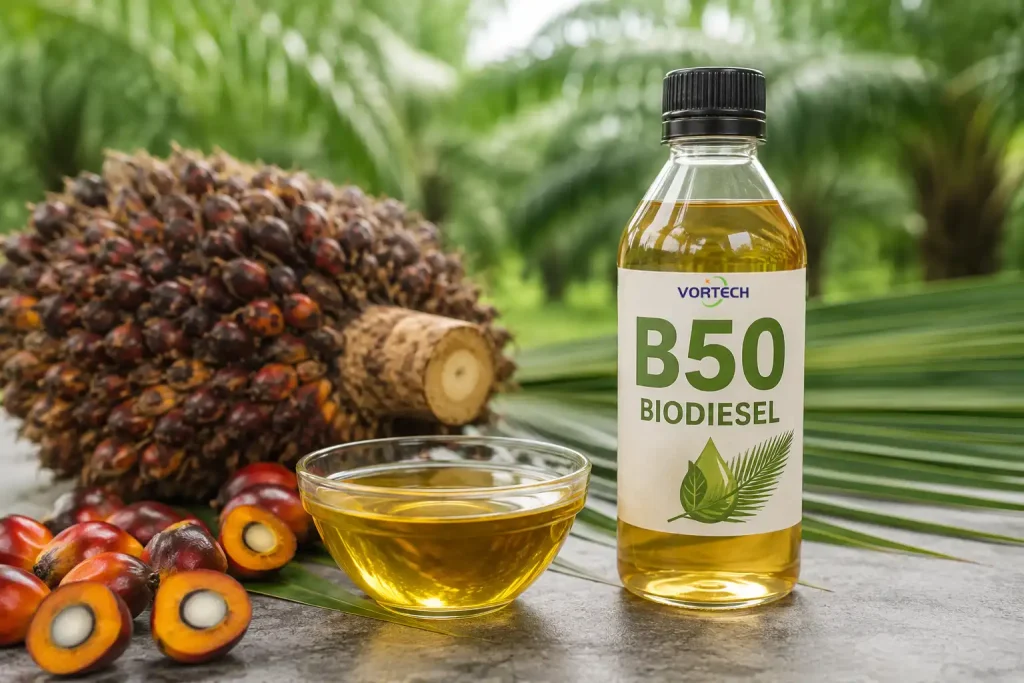
Palm Oil Processing Equipment for Biodiesel Feedstock Preparation
Indonesia’s B50 biodiesel policy is reshaping the palm oil processing industry. Under B50, diesel fuel contains 50% palm-based biodiesel and 50% conventional diesel. Reuters reported that Indonesia’s B50 mandate took effect on July 1, 2026, raising the required blend from B40 to B50 and requiring producers to supply higher-quality palm-based diesel for blending. For palm oil mills, biodiesel producers, and equipment buyers, this policy creates a clear message: feedstock preparation must become more efficient, stable, and quality-focused. Producing biodiesel is not only about having enough crude palm oil. It also depends on reliable upstream processing, moisture control, impurity reduction, storage stability, and consistent material handling. B50 Increases Demand for Feedstock Made from Palm Food, cosmetics, oleochemicals, detergents, and industrial applications have long used palm oil. With the growth of biodiesel mandates, palm oil is now also a strategic energy feedstock. Reuters reported that Indonesia allocated 15.64 million kilolitres of biodiesel under the B40 mandate for 2026, while a full-year B50 mandate could raise biodiesel consumption to as much as 20.1 million kilolitres. This increase means palm oil mills and biodiesel plants need to prepare larger volumes of feedstock while maintaining stable quality. Biodiesel Program Palm-Based Biodiesel Share Estimated Biodiesel Volume Feedstock Impact B40 40% 15.64 million KL allocated for 2026 Strong domestic palm oil absorption B50 50% Up to 20.1 million KL/year Higher demand for prepared biodiesel feedstock Increase from B40 to B50 +10 percentage points About +4.46 million KL potential demand More pressure on processing capacity This growth creates opportunities for palm oil producers, but it also brings pressure. More biodiesel demand means more fresh fruit bunch processing, more crude palm oil handling, more by-product management, and stricter control across the production chain. What Is Biodiesel Feedstock Preparation? Biodiesel feedstock preparation refers to the process of turning palm oil materials into a stable, usable input for biodiesel production. In palm-based biodiesel production, the feedstock may include crude palm oil, refined palm oil, palm fatty acid distillate, or other palm-based oil streams depending on local regulations and plant design. Before the oil enters biodiesel conversion, it must meet certain handling and quality requirements. High moisture, excess impurities, poor storage conditions, and unstable oil quality can affect processing efficiency and final fuel performance. Feedstock preparation usually focuses on: Removing moisture Reducing solid impurities Stabilizing oil quality Improving storage and transfer Controlling temperature Supporting continuous production Managing palm oil residues and by-products For equipment buyers, this means the preparation line is not a small supporting section. It is among the most crucial links in the supply chain for biodiesel. Fresh Fruit Bunch Processing Is the First Step The feedstock journey starts at the palm oil mill. To minimise the loss of oil quality, fresh fruit bunches must be treated as soon as they are harvested. Delays can lower the quality of crude palm oil and raise the quantities of free fatty acids. A typical palm oil mill includes sterilization, threshing, digestion, pressing, clarification, separation, drying, and storage. Each step affects the stability of the oil that may later be used for biodiesel production. Process Step Main Purpose Equipment Used Biodiesel Feedstock Relevance Sterilization Loosen fruit and stop enzyme activity Sterilizer Helps protect oil quality Threshing Separate fruit from bunches Thresher Improves fruit recovery Digestion Break the fruit structure Digester Prepares fruit for pressing Pressing Extract crude palm oil Screw press Determines oil yield Clarification Remove water and solids Clarification tank, separator Improves oil cleanliness Oil drying Reduce moisture Vacuum dryer or oil dryer Supports storage stability Storage Hold oil before refining or transferring Storage tank Protects feedstock consistency As B50 increases demand, mills may need to review whether their existing equipment can support higher throughput without creating bottlenecks. A weak clarification or drying section can affect the whole biodiesel feedstock chain. Moisture Control Becomes More Important Moisture is one of the most important quality concerns in biodiesel feedstock preparation. According to Reuters, Indonesia’s new B50 standards have longer oxidation stability and less water content than B40. This means upstream preparation equipment must support better control before fuel blending. In palm oil processing, moisture can come from fresh fruit, steam sterilization, washing, sludge, storage tanks, or poor separation. If moisture remains too high, it can increase processing difficulty and affect downstream conversion. Drying equipment helps reduce water content and improve material stability. For oil streams, vacuum drying or controlled thermal drying may be used. For solid residues and by-products, rotary dryers, paddle dryers, and other industrial dryers can support moisture reduction before reuse. Filtration and Separation Improve Feedstock Cleanliness Biodiesel feedstock should be as clean and stable as possible. Solid impurities, fibers, sludge, gums, and residual water can increase equipment wear and reduce process stability. Palm oil mills often use settling tanks, vibrating screens, decanters, centrifuges, filters, and clarification systems to separate oil from water and solids. The purpose is not only to improve crude palm oil quality, but also to protect downstream refining and biodiesel equipment. Clean feedstock reduces blockage risk, improves heat transfer, supports stable pumping, and lowers maintenance pressure. For large biodiesel programs such as B50, even small improvements in separation efficiency can make a major difference at industrial scale. Storage and Heating Systems Support Continuous Supply Biodiesel plants need a continuous and predictable feedstock supply. Palm oil can become difficult to pump when temperature drops, so storage tanks, heating coils, insulated pipelines, and transfer pumps are important parts of the preparation system. A well-designed storage system should keep palm oil at a suitable temperature, reduce contamination risk, and prevent water from accumulating at the bottom of tanks. Tank cleaning, drainage design, and level monitoring also affect long-term feedstock stability. For high-volume biodiesel production, storage capacity must match delivery schedules, processing rate, and blending demand. When the feedstock supply is unstable, even advanced biodiesel conversion equipment may face production interruptions. Palm Oil Production Growth Still Requires Better Equipment Efficiency Indonesia continues to be the biggest producer of palm oil worldwide.USDA-related reporting showed that Indonesia’s 2026/27 palm oil production was forecast to rise