
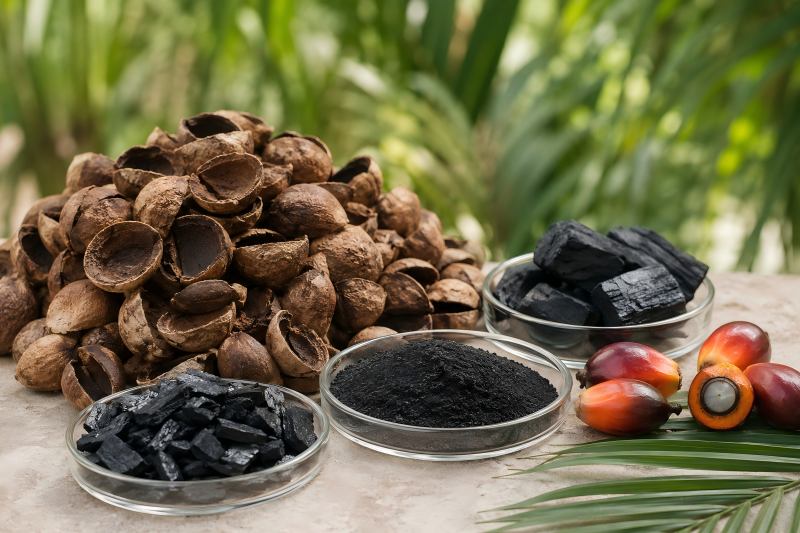
Zero-Waste Palm Oil Processing: How Every Part of the Oil Palm Creates Value
Oil palm trees produce far more than crude palm oil. Palm kernels, shells, fibers, empty fruit bunches, liquid effluent, fronds, and trunks can all become useful raw materials when the correct processing system is applied. The GAPKI article highlights a zero-waste approach in which every part of the oil palm tree is directed toward a practical application. For palm oil producers, this approach can reduce disposal pressure, improve resource efficiency, and create additional income beyond oil extraction. A successful zero-waste palm oil mill does not need to manufacture every possible downstream product. It should select the most practical products based on biomass volume, moisture content, local demand, available energy, transportation distance, and investment budget. Oil Palm Material Main Processing Options Potential Products Palm fruit Sterilization, threshing, digestion, pressing, clarification Crude palm oil Palm kernel Nut cracking, kernel separation, crushing, oil extraction Palm kernel oil and kernel meal Palm kernel shell Cleaning, drying, crushing, and carbonization Boiler fuel, biochar, activated carbon Empty fruit bunch Pressing, shredding, drying, composting Compost, mulch, pellets, pulp, and biochar Mesocarp fiber Separation, drying, compacting, and combustion Boiler fuel and biomass pellets Palm oil mill effluent Screening, anaerobic digestion, and treatment Biogas, organic fertilizer, and reusable water Palm fronds Chopping, crushing, drying, and mixing Animal feed, compost, fiber, and biochar Palm trunks Cutting, shredding, pressing, and drying Panels, pulp, biochar, and fermentation materials What Is Zero-Waste Palm Oil Processing? Zero-waste palm oil processing means planning a useful destination for each material stream generated by the mill. The objective is not only to reduce landfill waste but also to recover energy, nutrients, fiber, and industrial raw materials. In a conventional mill, attention is often concentrated on crude palm oil output. Shells, fibers, empty bunches, sludge, and wastewater may be handled only after they have already created storage or environmental problems. A zero-waste mill considers these materials during the initial process and factory layout design. Oil extraction, biomass handling, wastewater treatment, energy generation, storage, and downstream production should work as connected systems. Palm Fruit for Crude Palm Oil Production Fresh fruit bunches are first delivered to the receiving station and then sterilized with steam. Sterilization helps loosen the fruits, deactivate enzymes, and prepare the bunches for threshing. After threshing, the separated fruits enter the digester and screw press. The pressing stage separates an oil-containing liquid from the solid press cake. The liquid passes through clarification and purification systems to remove water, sludge, sand, and fine fiber. Stable temperature, controlled dilution, and suitable separation equipment help reduce oil loss. The press cake still contains valuable fiber and palm nuts. These materials should be transferred to a recovery system rather than treated as mixed solid waste. Palm Kernels for Additional Oil Recovery Palm nuts are separated from the press cake after the mesocarp fiber is removed. The nuts are then dried or conditioned before entering a cracking system. After cracking, the shell and kernel mixture must be separated efficiently. Poor separation can result in kernels entering the boiler fuel stream or shells contaminating the kernel storage system. The recovered kernels can be processed into palm kernel oil. Palm kernel cake or meal may also be used in suitable feed and industrial applications. For new palm oil mills, kernel recovery should be included in the original layout. Adding the system later may require additional conveyors, storage areas, foundations, dust control, and utility connections. Palm Kernel Shells as Biomass Fuel Palm kernel shells are dense, relatively dry, and easier to store than many other palm residues. They are widely used as fuel in biomass boilers. In an integrated palm oil mill, shells can supply part of the heat required for steam generation. This may reduce dependence on purchased coal, diesel, gas, or other external fuels. Before combustion, the shells should be separated from stones, metals, kernels, and excessive dust. Consistent particle size and moisture improve feeding stability and combustion control. Some mills sell surplus palm kernel shells to cement plants, biomass power stations, industrial boiler users, or fuel traders. In this case, shell cleanliness and moisture become important commercial specifications. Palm Kernel Shells for Activated Carbon Palm kernel shells can also be converted into biochar or activated carbon. Their hard structure and carbon content make them suitable for selected adsorption applications. A typical processing line may include: Raw shell cleaning Controlled carbonization Crushing and screening Chemical or steam activation Washing and neutralization Drying and final classification Activated carbon production offers more potential value than direct combustion, but it also requires more equipment and tighter process control. The producer must control pore structure, ash content, moisture, particle size, and adsorption performance. This option is more suitable when the manufacturer has access to technical expertise and stable customers in water treatment, air purification, food processing, mining, or chemical production. Empty Fruit Bunches as a Major Biomass Resource Empty fruit bunches are generated after fruits are removed during threshing. They are one of the largest solid biomass streams in a palm oil mill. Fresh EFB is bulky and contains considerable moisture. Direct transportation is expensive because the producer is effectively transporting both fiber and water. Pressing can remove part of the liquid, while shredding reduces the material size. These steps improve conveying, storage, drying, composting, and downstream conversion. EFB processing equipment should be located close to the threshing station whenever possible. Early volume reduction can decrease handling costs throughout the factory. EFB for Compost and Plantation Mulch Shredded empty fruit bunches can be returned to plantations as mulch. They help cover the soil, retain moisture, and return part of the organic matter to the field. EFB can also be mixed with treated sludge, animal manure, or other organic materials to produce compost. Shredding increases the exposed surface area and supports more uniform decomposition. A composting system must still control: Moisture level Carbon-to-nitrogen balance Aeration Pile temperature Turning frequency Composting time Simply stacking untreated EFB does not guarantee stable compost. Poor aeration may produce odor, excessive leachate, or slow decomposition. EFB for Biomass Fuel and Pellets