
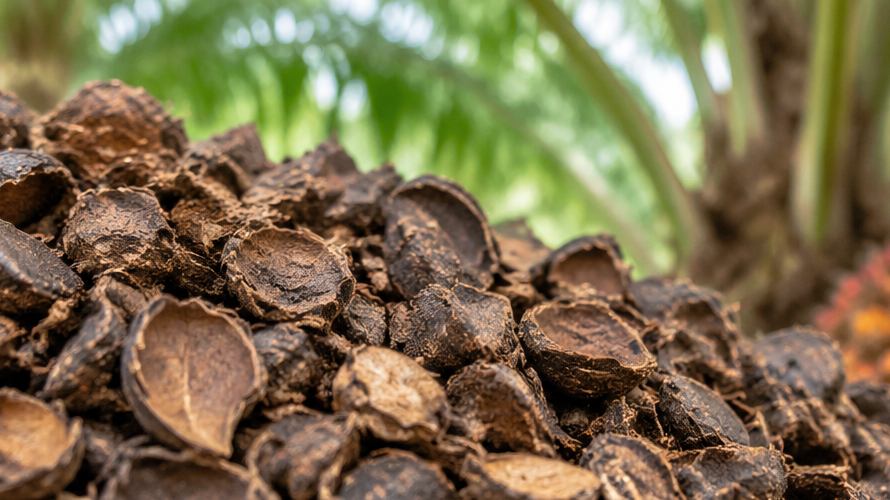
Palm kernel shell (PKS) is a biomass by-product of palm oil processing and a fuel option for industrial boilers and other thermal applications. For buyers, however, a competitive price or attractive product photo is not enough to confirm suitability. Fuel quality affects usable energy, feeding stability, ash handling, storage, transport costs, and heat output. A reliable evaluation combines laboratory results, physical inspection, representative sampling, and an understanding of the buyer’s combustion system.
There is no single PKS specification for every boiler or market. Acceptance limits depend on equipment design, fuel handling, delivery conditions, and the purchase contract. The following checks help buyers evaluate a shipment before placing an order or accepting delivery.
Confirm the Origin and Consistency of the PKS
Confirm the mill or supply source and whether the material comes from one consistent source or several blended suppliers. Separation, handling, and storage can all affect PKS condition, so ask how mixed batches are controlled.
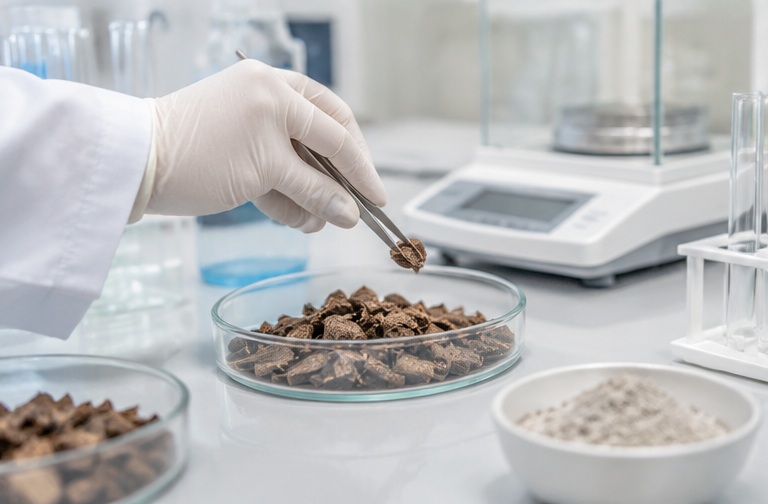
Request a recent Certificate of Analysis (COA) linked to the relevant lot, not just a generic specification sheet. The report should clearly state the sample identification, testing date, laboratory name, test methods, measurement units, and reporting basis. To learn more about the material’s origin, refer to our guide to the by-products of palm oil production.
Check Moisture Content
Moisture is critical because water does not provide useful heat. A wetter shipment delivers less usable energy per tonne, requires heat for evaporation, and increases the cost of transporting water. Improper storage conditions may further aggravate the problem.
Verify whether the moisture content is expressed on an as-received basis or a dry basis. These values are not interchangeable. The as-received value reflects the fuel as delivered and is usually important for commercial purchasing. State the required basis, test method, sampling point, and acceptance limit in the contract.
Do not rely on appearance alone. Shells may look dry on the surface while moisture varies within a stockpile or shipment. Use a representative sample and an agreed laboratory method.
Compare Calorific Value on the Same Basis
Calorific value indicates the heat released under specified test conditions and helps buyers compare offers and estimate fuel consumption.
Understand the difference between gross calorific value (GCV, also known as HHV) and net calorific value (NCV, also known as LHV). They treat the heat associated with water in combustion products differently, so a GCV result should not be compared directly with an NCV result.
The reporting basis matters too. A dry-basis value excludes the effect of moisture, while an as-received value reflects delivered fuel. Ask suppliers to quote the same calorific value type and basis. A higher value can be attractive, but it should be considered alongside moisture, ash, particle size, bulk density, and boiler performance.
Measure Ash Content and Consider Ash Behaviour
Ash is the inorganic residue left after combustion. High ash content means a larger share of each tonne does not contribute heat and more residue must be removed from the furnace and ash-handling system. Ask for ash content with a clearly stated basis, such as dry basis, and compare it with the boiler’s ash removal capacity.
For some applications, ash composition and melting behaviour also matter. Potassium, sodium, and silica can influence deposits, slagging, or fouling under certain conditions. If the plant experiences clinker formation or frequent cleaning, additional ash analysis may be justified. Although low ash content is beneficial, it does not necessarily ensure clean and efficient combustion.
Inspect Particle Size, Fines, and Foreign Materials
PKS is coarse and irregular. Oversized pieces may bridge or block equipment designed for smaller fuel, while excessive fines can increase dust, disrupt feeding, and create handling losses.
Ask for a size distribution rather than accepting a general description such as “standard size.” The contract can define the required range and permitted proportions of fines and oversized pieces. Inspect for stones, soil, metal fragments, plastic, and excessive residual fiber. Foreign matter can damage conveyors, feeders, and screens, increase ash, or create safety concerns.
Visual inspection helps identify obvious contamination, but it cannot replace sampling and screening. If separation quality is a recurring issue at the mill, see our guide to common palm kernel shell separator problems and solutions.
Understand Bulk Density and Handling Performance
Bulk density is the mass of fuel in a given volume. It matters when PKS is purchased, transported, or stored by volume and helps estimate storage capacity.
A higher bulk density may allow more fuel to fit into a given space, but the result varies with particle size, moisture, packing, vibration, and handling. Consider bulk density together with calorific value to estimate the energy that can be transported or stored in a given volume. Confirm whether the shipment is sold by mass or volume and ensure that loading and delivery records use a clear method.
Request Additional Chemical Tests When Needed
For many purchases, moisture, calorific value, ash, particle size, and contamination checks form the core assessment. Some boilers or regulatory environments require further analysis.
Sulfur and chlorine may be important where emissions limits or corrosion risks are a concern. During combustion, compounds containing these elements can contribute to emissions and corrosion. Potassium and sodium may also be relevant when investigating ash deposits. Select additional tests according to boiler design, fuel blends, operating conditions, emissions requirements, and maintenance history.
Make Sampling and Independent Testing Part of the Purchase
A test result is only as reliable as its sample. A handful of shells from the top of a pile may not represent a whole truckload or container because moisture, fines, and contamination can vary across a consignment.
Agree in advance how samples and increments will be collected, combined, reduced, and tested. Document the procedure so the sample represents the lot. For large or high-value shipments, use an independent inspection company or laboratory.
Define the inspection location, test methods, tolerances, retesting procedure, and cost responsibility in the contract. Clear acceptance rules reduce disputes.
Common Test Methods for PKS Evaluation
| Parameter | Relevant solid-biofuel method | What it helps assess |
| Sampling | ISO 18135 | Representative samples from a lot |
| Moisture | ISO 18134 series | Total moisture content |
| Ash | ISO 18122 | Inorganic residue after combustion |
| Calorific value | ISO 18125 | Energy content |
| Particle size | ISO 17827 series | Size distribution |
| Bulk density | ISO 17828 | Mass per unit volume |
| Sulfur and chlorine | ISO 16994 | Elements relevant to emissions and corrosion |
These standards describe test or sampling methods; they do not set one universal acceptance grade for all PKS. Buyers should specify the required limits and reporting basis in the purchase contract.
Follow a Practical PKS Buying Checklist
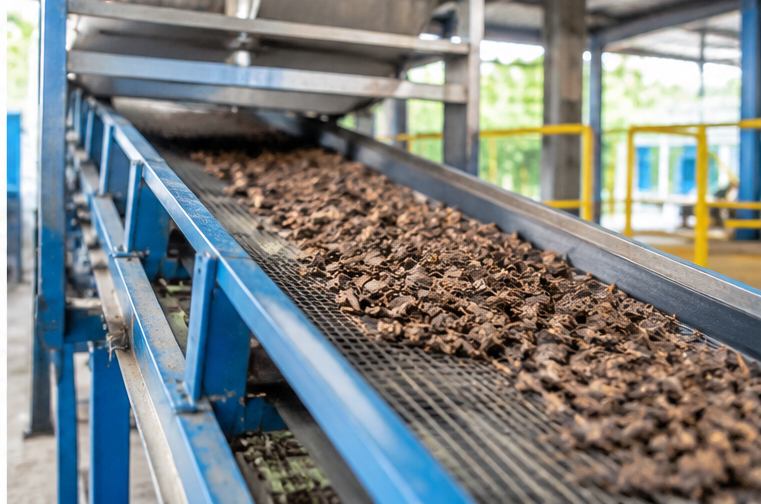
Before placing an order, confirm that the supplier can provide:
- Clear identification of the source and production batch.
- A recent COA linked to the production lot.
- Moisture and calorific value with the reporting basis stated.
- Ash content and, where necessary, ash composition or melting characteristics.
- Particle size distribution and limits for fines and oversized pieces.
- Bulk density measured by an agreed procedure when volume handling matters.
- Information on stones, soil, metal, plastic, and other foreign materials.
- A documented sampling, inspection, and rejection procedure.
- Storage and loading practices that protect the material from rain and contamination.
The goal is consistent performance in the intended system, not the highest possible value for every parameter.
Match PKS Quality with the Boiler and Supply Chain
The best PKS is not always the fuel with the highest calorific value or lowest price per tonne. Compare delivered cost per unit of usable energy and consider whether excess moisture, fines, or contamination could increase consumption, maintenance, or downtime.
Check the boiler’s fuel-size limits, feeding equipment, combustion system, ash removal capacity, and fuel-chemistry restrictions. If PKS is blended with other biomass, assess the blend as well as each material.
Before a long-term agreement, consider a trial shipment. Record fuel consumption, heat or steam output, ash volume, feeding stability, and deposits or blockages. Compare these results with the laboratory report and refine the specification. For broader palm oil mill planning and biomass recovery options, explore our palm oil equipment solutions.
Frequently Asked Questions
What is the most important quality parameter for PKS fuel?
No single parameter defines quality. Moisture and calorific value affect usable energy; ash, size, density, and contamination affect handling and combustion. Evaluate them together.
What moisture content should buyers require?
Set the limit according to the boiler, delivery conditions, storage, and contract. Ensure all results are evaluated using consistent reporting criteria.
Is a Certificate of Analysis sufficient for shipment approval?
A COA should identify the batch and use representative sampling. Combine it with physical inspection and, where appropriate, independent testing.
Evaluating PKS requires more than checking calorific value. Verify the source, moisture, ash, calorific value basis, particle size, contamination, and relevant fuel chemistry using representative samples and agreed test methods.
Matching the specification to the boiler and supply chain helps buyers reduce uncertainty and improve consistency. A clear specification, reliable COA, and documented inspection process support dependable PKS supply.