
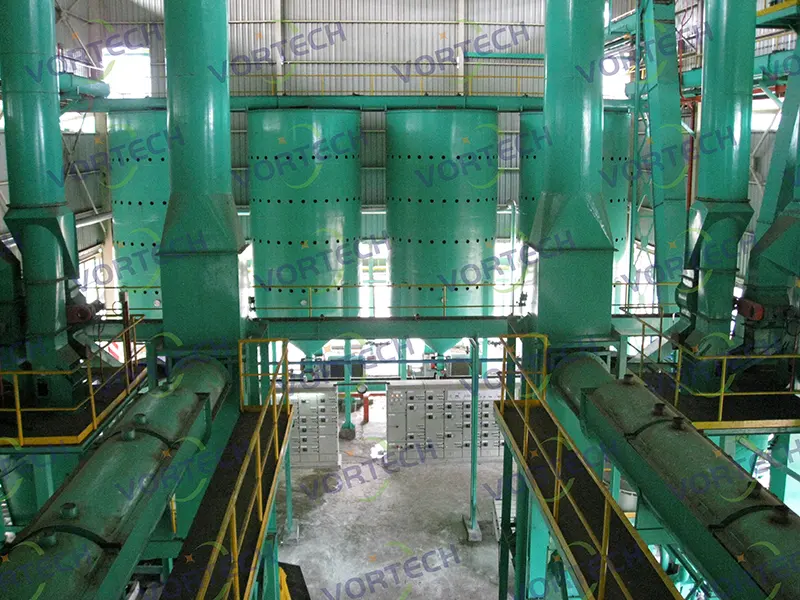
Palm kernel shell is a common by-product of palm oil processing. In many palm oil mills, it is used as boiler fuel or sold as a low-value biomass material.
However, recent news from GAPKI shows a more valuable direction. According to the report, Indonesia’s National Research and Innovation Agency, BRIN, considers palm kernel shells a promising raw material for activated carbon production.
This is important for the palm oil industry because activated carbon is widely used in water treatment, industrial purification, chemical processing, waste treatment, and environmental protection.
For palm oil producers, this means palm kernel shells can move from a simple by-product to a higher-value industrial material.
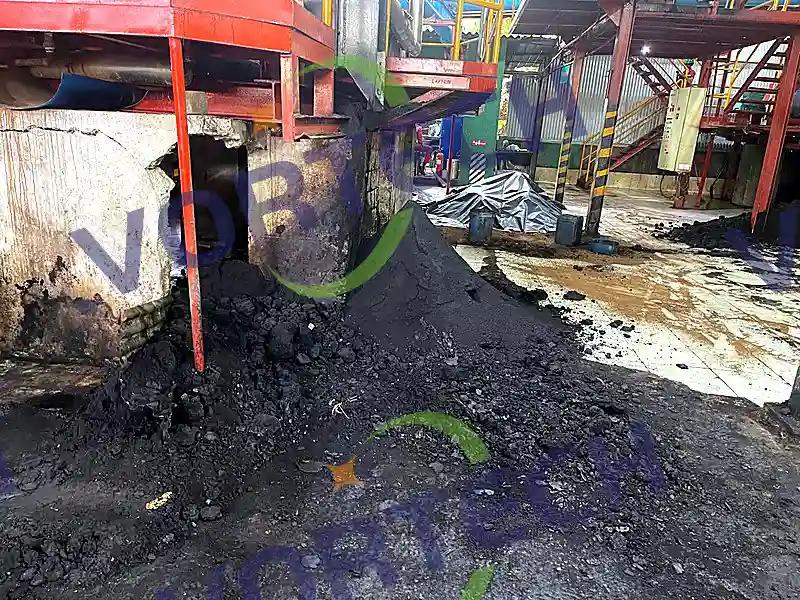
Why Palm Kernel Shell Is Suitable for Activated Carbon
Palm kernel shells have several natural advantages. They are hard, carbon-rich, and have a structure that can support pore development after carbonization and activation.
Activated carbon works mainly through adsorption. The more developed the pore structure, the better the material can capture impurities, odors, color compounds, and pollutants.
Palm kernel shell-based activated carbon is especially attractive because the raw material comes from renewable biomass. This makes it different from coal-based activated carbon and supports the circular use of palm oil processing residues.
| Raw Material | Main Advantage | Main Challenge | Suitable Direction |
| Palm Kernel Shell | Renewable biomass, natural porous structure | Storage space and raw material price fluctuation | Biomass-based activated carbon |
| Coal | Stable supply and higher fixed carbon content | Emission control and non-renewable sources | Conventional activated carbon |
| Coconut Shell | High hardness and good adsorption quality | Regional supply limitation | High-grade activated carbon |
BRIN’s Study Shows Commercial Potential
The GAPKI news article states that BRIN talked about the viability of producing activated carbon from coal and palm kernel shells.
The study compared two production models. Each plant was designed to process 25,000 tons of raw material per year. The analysis covered capital expenditure, operating cost, profitability, and investment feasibility.
This information is valuable for palm oil companies, biomass processors, and investors. It shows that palm kernel shell activated carbon is not only a laboratory concept, but also a possible commercial project.
| Study Focus | Key Point |
| Annual Raw Material Capacity | 25,000 tons per year |
| Compared Feedstocks | Coal and palm kernel shell |
| Main Evaluation Items | CAPEX, OPEX, profitability, investment feasibility |
| Industry Meaning | Supports downstream palm biomass utilization |
| Market Direction | Domestic activated carbon production and import replacement |
How Activated Carbon Is Made from Palm Kernel Shells
The production of palm kernel shell activated carbon is not a single-step process. It requires stable material preparation, thermal processing, activation, cooling, size control, and final packaging.
A typical process may include:
- Raw Material Collection
Palm kernel shells are collected from palm oil mills and stored for processing.
- Cleaning and Sorting
Stones, metal pieces, dust, and oversized impurities should be removed.
- Crushing or Size Reduction
The shells are crushed into a more uniform size to improve process stability.
- Drying
Moisture must be reduced before carbonization. High moisture increases energy use and affects final product quality.
- Carbonization
The palm kernel shell is heated under controlled conditions to form carbon-rich char.
- Activation
Physical or chemical activation develops the internal pore structure and improves adsorption performance.
- Cooling and Screening
The activated carbon is cooled, classified, and screened into different particle sizes.
- Grinding and Packaging
The final product can be processed into granular activated carbon or powdered activated carbon according to market needs.
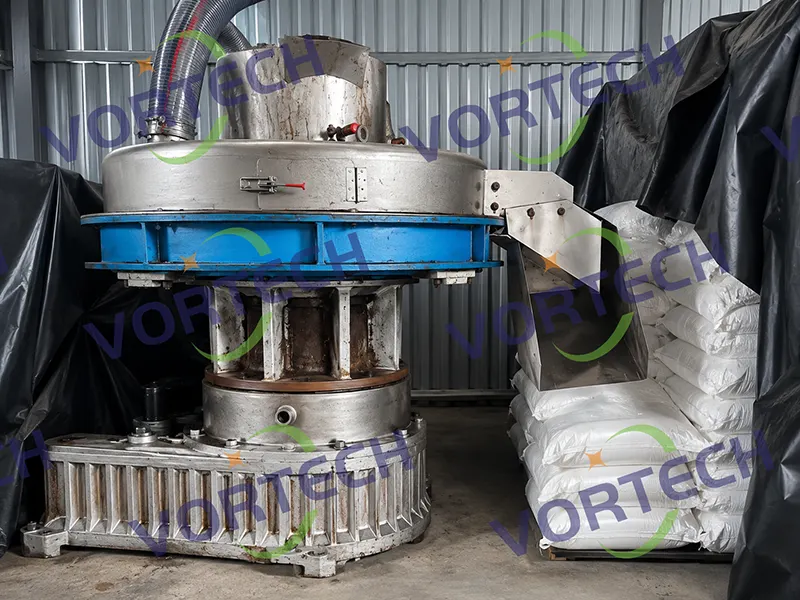
Main Equipment Used in Palm Kernel Shell Activated Carbon Processing
For Vortech Global, this topic is highly relevant because palm kernel shell activated carbon production requires integrated powder and biomass processing solutions.
A complete line is not only about carbonization. Stable preparation before thermal processing is also critical.
| Process Stage | Equipment Needed | Purpose |
| Raw Material Handling | Conveyor, storage bin, feeding system | Move and store palm kernel shells |
| Cleaning | Magnetic separator, screening machine | Remove impurities |
| Size Reduction | Crusher, grinder, mill | Control particle size |
| Moisture Control | Rotary dryer or other drying equipment | Reduce moisture before carbonization |
| Carbonization | Carbonization furnace or kiln | Convert biomass into char |
| Activation | Activation furnace or reactor | Develop pore structure |
| Classification | Vibrating screen, classifier | Separate different particle sizes |
| Dust Control | Dust collector | Improve working environment |
| Packaging | Packing machine | Prepare final product for sale |
Why Drying and Size Control Matter
Palm kernel shells may come with different moisture levels depending on storage, season, and mill conditions. If the material is too wet, carbonization becomes less efficient and energy consumption increases.
Particle size also affects heating uniformity. If the raw material is too uneven, some particles may be over-processed while others remain under-processed.
For this reason, crushing, grinding, drying, and screening are important before carbonization and activation.
A well-designed preparation system can help improve:
- Feedstock consistency
- Energy efficiency
- Carbonization stability
- Activation quality
- Final product uniformity
- Production line safety
- Dust and material loss control
Applications of Palm Kernel Shell Activated Carbon
Activated carbon made from palm kernel shell can be used in many industries. Its value depends on adsorption performance, particle size, hardness, ash content, moisture level, and pore structure.
| Application Field | Main Use | Product Form |
| Water Treatment | Remove odor, color, organic matter, and impurities | Granular or powdered activated carbon |
| Wastewater Treatment | Adsorb pollutants and improve discharge quality | Powdered or granular activated carbon |
| Food and Beverage | Decolorization and purification | Powdered activated carbon |
| Chemical Processing | Refining, separation, and impurity removal | Granular activated carbon |
| Air Purification | Odor and gas adsorption | Granular activated carbon |
| Industrial Filtration | Process purification and environmental control | Customized particle size |
A New Value Chain for Palm Oil Mills
Empty fruit bunches, palm fibre, palm kernel shells, and palm oil mill effluent are some of the byproducts produced by palm oil mills. In many cases, these materials are underused or sold at low prices.
The GAPKI news shows that palm kernel shells may support a stronger downstream value chain. Instead of only using them as fuel, palm oil companies can consider deeper processing into activated carbon.
This creates several possible benefits:
- Higher added value from palm biomass
- Better use of palm oil processing residues
- New revenue channels for palm oil mills
- Reduced dependence on imported activated carbon
- Stronger support for circular economy development
- More opportunities for biomass processing equipment suppliers
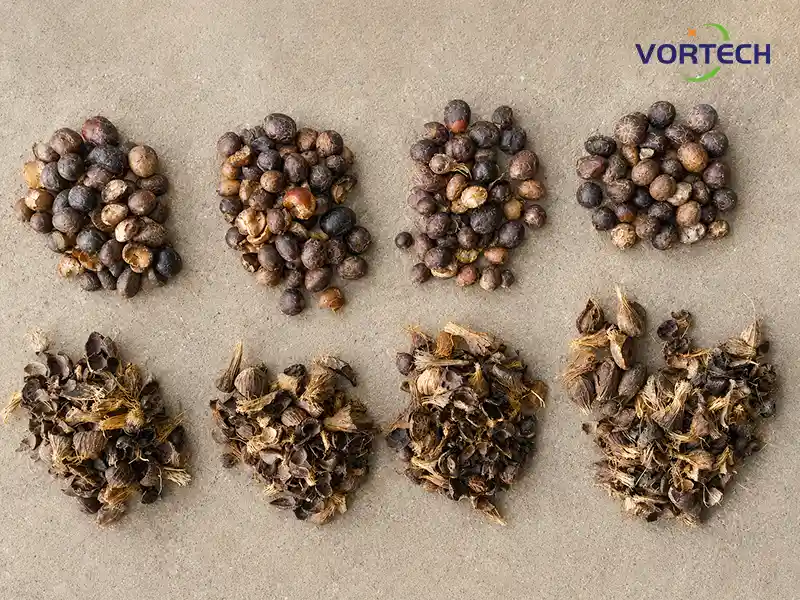
Key Challenges Before Building a Production Line
Although palm kernel shell activated carbon has strong potential, investors still need to evaluate practical production conditions.
Before starting a project, palm oil producers should check:
- Is the palm kernel shell supply stable?
- Is the moisture level controlled?
- Is there enough storage space for biomass feedstock?
- What activated carbon grade does the target market need?
- What particle size should the final product reach?
- What energy source will support carbonization and activation?
- What dust collection and emission control systems are required?
- Can the production line operate continuously and safely?
These questions directly affect equipment selection, plant layout, operating cost, and final product quality.
What This Means for Biomass Processing Equipment
The growth of palm kernel shell activated carbon production will increase demand for reliable processing systems. Equipment suppliers need to support not only single machines, but also complete production line planning.
For palm kernel shell projects, the equipment solution should be designed around the real characteristics of the material. This includes hardness, bulk density, moisture, particle size, dust level, and storage condition.
Vortech Global can support biomass and powder processing projects with equipment for crushing, grinding, drying, mixing, conveying, screening, and integrated production line design.
For companies entering the activated carbon industry, stable pre-processing is a key foundation for stable carbonization and activation.
Palm kernel shell activated carbon offers strong value for Indonesia’s palm oil industry. With proper processing technology, this biomass by-product can become a high-value material for water treatment, waste treatment, chemical processing, and industrial filtration.