
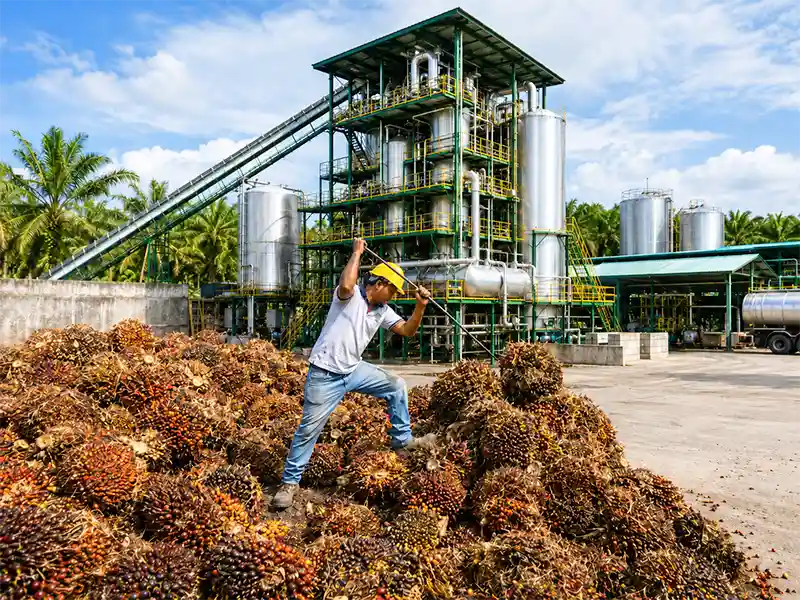
Biodiesel Demand Is Rising: Upgrade Your Palm Oil Mill Now
The palm oil market is entering a new growth cycle, driven by biodiesel demand, energy volatility, and tighter vegetable oil supply. For producers, this is not only about higher prices—it is also about production efficiency. Reuters reported that Malaysian palm oil prices could rise about 12% to around 5,200 ringgit per metric ton by mid-July 2026, after already climbing roughly 15% since late February. For palm oil mills, higher prices create profit opportunities, but they also make oil loss, downtime, poor processing, and high energy use more costly. That is why modern palm oil processing equipment is becoming essential for mills serving both edible oil and biodiesel markets. Market Background: Biodiesel Is Reshaping Palm Oil Demand Palm oil has long been used in food, cosmetics, oleochemicals, animal feed, and industrial applications. Today, biodiesel is becoming one of the strongest drivers of palm oil demand. In order to lessen its reliance on fossil fuels and absorb its own supply of palm oil, Indonesia, the largest producer of palm oil in the world, has increased the usage of palm-based biodiesel. Reuters reported that Indonesia used 14.2 million kilolitres of biodiesel in 2025, up 7.6% from the previous year, and allocated 15.65 million kilolitres for 2026. This demand shift affects the global palm oil trade. When more palm oil is used domestically for biodiesel, less supply may be available for export. This can tighten the global market and support prices, especially when energy prices are also high. Malaysia is also moving toward a phased expansion of its palm-based biodiesel program, with plans to increase usage from B10 toward higher blends such as B20 and B30 over time. For palm oil equipment buyers, the message is clear: palm oil processing is no longer focused only on edible oil production. Mills must now prepare for a market where biodiesel demand can influence capacity planning, oil quality requirements, and investment decisions. Key Market Data Snapshot Market Signal Data / Trend What It Means for Palm Oil Mills Malaysian palm oil price outlook Potential rise to around 5,200 ringgit/ton by mid-July 2026 Higher oil value makes extraction efficiency more important Recent price movement Prices rose roughly 15% since late February Mills may benefit from faster processing and lower downtime Indonesia’s biodiesel use 14.2 million kilolitres in 2025 Biodiesel is already a major palm oil demand driver Indonesia 2026 biodiesel allocation 15.65 million kilolitres Demand pressure may continue through 2026 Malaysia biodiesel direction Phased expansion toward higher palm biodiesel blends Regional demand may support long-term equipment investment The price and biodiesel data show that palm oil mills are operating in a more demand-sensitive environment. In this environment, equipment performance directly affects profitability. Why Higher Palm Oil Prices Increase the Value of Equipment Efficiency When CPO prices are low, some mills may delay equipment upgrades. When prices rise, however, the cost of inefficiency becomes much higher. For example, if the market price moves from 4,647 ringgit to 5,200 ringgit per ton, the difference is 553 ringgit per ton. That means every additional ton of recoverable crude palm oil has a higher revenue value. Reuters reported both the 4,647 ringgit benchmark level and Mistry’s 5,200 ringgit forecast. Example: How Oil Recovery Affects Revenue Mill Condition FFB Processed per Month Estimated OER CPO Output Business Meaning Outdated line 10,000 tons 19.0% 1,900 tons More oil may remain in fiber, sludge, or empty bunches Improved line 10,000 tons 20.0% 2,000 tons 100 more tons of CPO per month High-efficiency line 10,000 tons 20.5% 2,050 tons Stronger revenue potential during high-price periods This table is only an illustrative calculation, but it shows the commercial logic clearly. Even a small increase in oil extraction rate can create meaningful additional output. For B2B buyers, this is why palm oil processing equipment should not be evaluated only by purchase price. It should be evaluated by oil recovery, uptime, energy consumption, maintenance cost, automation level, and long-term return. Supply and Inventory Trends Support Capacity Planning Palm oil demand is rising, but supply conditions remain important. According to Malaysian Palm Oil Board data reported for March 2026, Malaysia’s crude palm oil production reached 1,376,849 tonnes, up 7.21% from February. The same monthly data showed strong movement in palm oil exports and changes in stocks, reflecting an active supply-demand environment. For palm oil mills, this type of market creates pressure to maintain stable output. When exports are strong and stocks are moving quickly, mills cannot afford frequent breakdowns during peak harvesting periods. Production delays can cause fruit deterioration, higher free fatty acid levels, and lower oil quality. This is particularly crucial as fresh fruit bunches need to be processed as soon as they are harvested. The risk of quality degradation increases with the length of the wait. Efficient receiving, sterilizing, threshing, pressing, clarification, and storage systems help mills protect both oil yield and oil quality. From Market Opportunity to Equipment Demand Rising biodiesel demand creates a stronger business case for palm oil mill investment. However, not every investment should focus only on larger capacity. In many cases, mills should first focus on better efficiency, lower losses, and more stable operation. The following table shows how market trends connect to equipment needs. Market Trend Mill Challenge Equipment Response Higher palm oil prices Oil loss becomes more expensive High-efficiency press, sludge separator, oil recovery system Strong biodiesel demand Need for stable CPO supply Reliable sterilizer, continuous processing line, automation Tighter supply conditions Need to reduce downtime Durable equipment, preventive maintenance design Higher quality requirements Need to control moisture and impurities Clarification tank, vibrating screen, oil filter, purifier Labor cost pressure Need to reduce manual work Automatic control system, conveyors, integrated line layout Energy cost pressure Need to reduce steam and power use Efficient boiler matching, heat recovery, and optimized sterilization Because of this, equipment used to refine palm oil is no longer just a manufacturing tool but rather a strategic investment. Key Equipment Upgrades for Palm Oil Mills A complete palm oil processing line should be designed around the mill’s capacity, fruit