
Common Palm Kernel Shell Separator Problems and Solutions
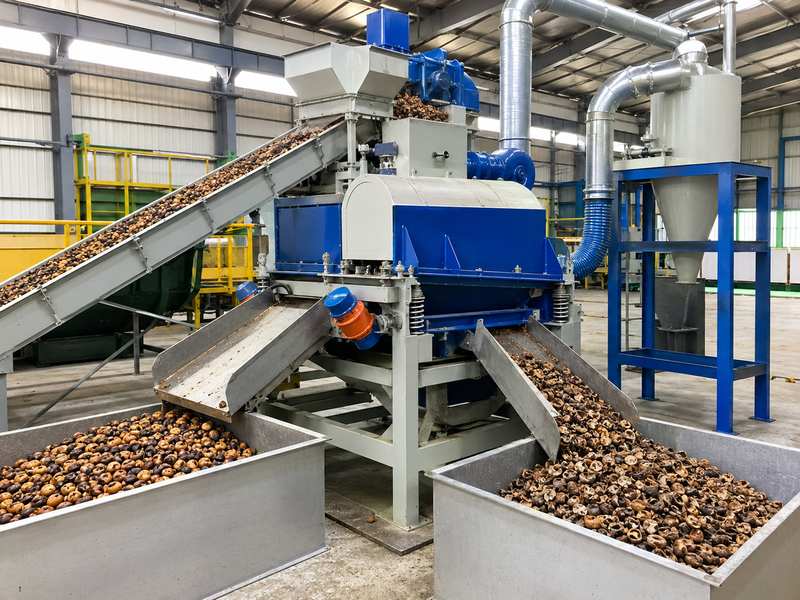
A palm kernel shell separator cleans cracked palm nuts by removing shells, dust, fiber, and impurities. It provides clean kernels for oil extraction and PKS for fuel or biomass use. Good separation protects screw presses, reduces downtime, improves kernel recovery, lowers waste, and increases PKS value. Why Separator Problems Matter Poor separator performance affects both sides of the production line. If too much shell enters the kernel stream, the oil press may wear faster and oil quality may decline. If too much kernel is discharged with shell, the mill loses valuable oil-bearing material. If the shell product is dirty, wet, or mixed with kernel, its value as biomass fuel also decreases. Palm kernel shell, or PKS, is widely used as biomass fuel for boilers, power plants, cement kilns, and other industrial heating applications. High-quality PKS should be clean, dry, uniform in size, and free from contaminants such as metal, stones, and dirt. Proper screening, drying, and storage help maintain fuel quality. Quick Troubleshooting Table Common Problem Main Cause Direct Impact Quick Solution High shell content in kernel Weak airflow, poor cracking, overloaded feed Lower kernel quality Adjust fan speed and feeding rate High kernel loss in shell Airflow too strong, wrong screen size Lower oil yield Reduce airflow and check screens Blocked screen Wet material, dust, fiber, small shell fines Lower capacity Clean screen and control moisture Many uncracked nuts Poor nut grading or cracker gap error Reprocessing required Regrade nuts and adjust cracker Excessive dust Over-crushing, dry shell fines, poor sealing Poor working environment Add cyclone and dust control Machine vibration Loose bolts, worn bearings, uneven foundation Equipment damage Tighten, balance, and inspect parts Low capacity Over-wet material, clogged ducts, weak motor Production delay Clean system and check power Wet PKS output High raw material moisture, poor drainage Poor fuel quality Dry shell and improve storage High Shell Content in Palm Kernel One of the most common problems is that separated kernels still contain too much shell. This usually happens when the airflow is too weak, the feeding rate is too high, or the cracked material is not well graded before separation. In air separation, lighter shell pieces should be blown away while heavier kernels fall down. If airflow is not strong enough, shell fragments remain with the kernel. If material enters too quickly, the separator cannot form a stable material layer, and separation becomes incomplete. Solutions: Increase fan speed gradually. Reduce the feeding rate. Clean air ducts and fan blades. Check whether the screen hole size matches the cracked material. Improve nut grading before cracking. Adjust the palm nut cracker to avoid oversized shell pieces. Practical target: For oil pressing, the kernel stream should be as clean as possible. A small amount of shell may still appear in low-cost systems, but excessive shell should be corrected immediately because it can increase press wear and reduce oil quality. High Kernel Loss in Shell Discharge Another serious issue is kernel loss. This means good palm kernels are discharged together with shells. In many mills, this is more expensive than shell contamination because palm kernel contains oil and has higher commercial value. Kernel loss usually happens when airflow is too strong, the separator angle is not correct, the screen opening is too large, or kernels are broken into small pieces during cracking. Small broken kernels are easier to be carried away by air, especially when mixed with light shell fragments. Solutions: Reduce airflow step by step. Check shell discharge for visible kernels. Use a secondary recovery screen. Recheck cracker settings to reduce broken kernels. Install a return system for mixed material. Train operators to sample shell discharge regularly. Check Point Normal Condition Warning Sign Shell discharge Mostly shell, very little kernel Visible whole kernels Kernel outlet Heavy kernel flow Many fine shell particles Airflow Stable and adjustable Sudden blowing or suction changes Cracked material Kernel mostly whole Too many broken kernels Screen Blocking Screen blocking is common in vibrating screen separators and combined separator systems. It is often caused by wet material, sticky fiber, shell dust, or too many fine particles. Once the screen is blocked, capacity drops quickly and separation accuracy becomes poor. Blocked screens can also cause uneven feeding into the air separator. Some areas receive too much material, while others receive too little, creating unstable separation. Solutions: Clean the screen regularly. Reduce raw material moisture before separation. Add a pre-cleaning screen for dust and fiber. Use proper screen hole size. Avoid over-crushing palm nuts. Check vibration motor performance. Cause of Blocking Solution Prevention Wet shell mixture Dry or condition material Improve storage and drainage Too much fiber Add fiber removal stage Maintain depericarper Fine shell dust Use pre-screening Adjust cracker pressure Wrong screen size Replace screen mesh Match screen with nut size Low vibration Check motor and springs Regular maintenance Too Many Uncracked Nuts If many uncracked nuts appear after separation, the problem is usually not the separator itself. It often comes from poor nut grading, wrong cracker gap, worn cracking parts, or high nut moisture. Palm nut cracking works best when nuts are sorted into similar sizes. If large and small nuts enter the cracker together, large nuts may remain uncracked while small nuts may be over-crushed. Solutions: Install or improve nut grading before cracking. Adapt the cracker gap to the size of the nuts. Replace worn cracking plates, hammers, or rollers. Dry nuts to a suitable moisture level. Return uncracked nuts for secondary cracking. In a palm kernel recovery station, the cracker breaks the palm nut so the kernel and shell can be separated, while hydrocyclone systems can separate kernel and shell particles by density or proportion in larger systems. Excessive Broken Kernels Broken kernels are not always a separator problem, but they greatly affect separator performance. When kernels break into small pieces, they become lighter and easier to lose with shell. They can also pass through screens incorrectly. Main causes include excessive cracker force, poor nut size grading, dry brittle kernels, or worn cracking components.