
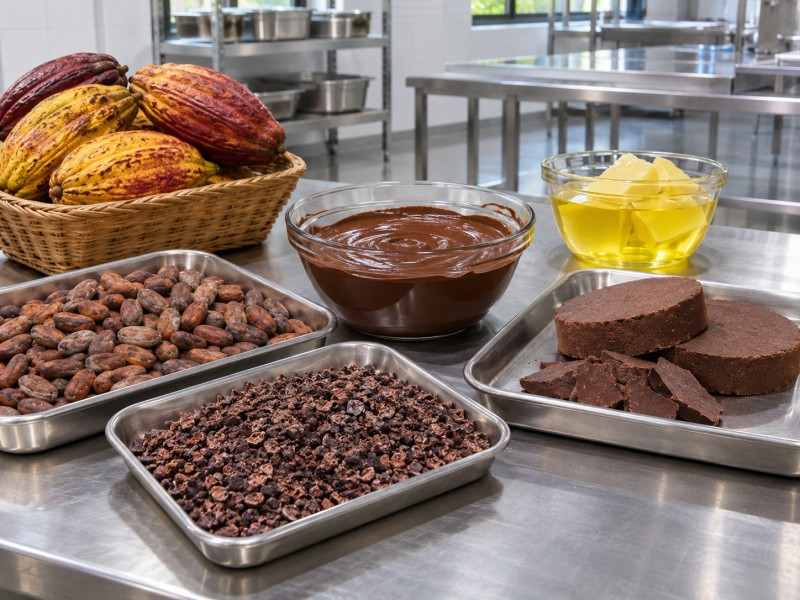
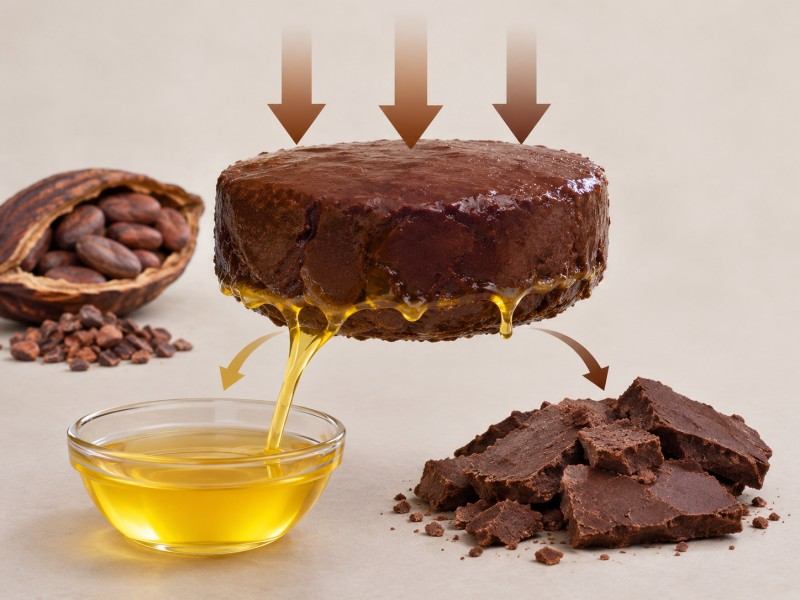
A hydraulic cocoa butter press extracts cocoa butter from cocoa liquor under high pressure, producing butter for chocolate, confectionery, and cosmetics, while the remaining cocoa cake can be further processed into cocoa powder.
Choosing the right machine depends on your processing capacity, hydraulic pressure, automation level, and daily output. This guide covers the key factors to help you select a suitable hydraulic cocoa butter press, improve extraction efficiency, and control production costs.
Determine Your Cocoa Processing Requirements
Before selecting a machine, evaluate your raw materials and production objectives. Different cocoa liquor characteristics and processing requirements can affect pressing performance.
Consider the following factors:
Cocoa Liquor Quality: Fat content, particle size, and material consistency influence extraction performance.
Processing Temperature: Appropriate temperature control helps maintain suitable cocoa liquor viscosity.
Target Cocoa Cake: Different applications may require different residual fat contents.
Production Volume: Daily processing requirements determine the necessary machine capacity.
Understanding these factors helps you identify the appropriate equipment specifications and avoid purchasing an undersized or oversized machine.
Choose the Appropriate Pressing Capacity
Pressing capacity determines how much cocoa liquor a hydraulic cocoa butter press can process per batch. Selecting the right capacity helps balance equipment investment and production efficiency.
Different production scales require different machine configurations.
| Production Scale | Equipment Requirements | Suitable Applications |
| Small-scale | Compact pressing chamber, simple operation | Pilot production and small factories |
| Medium-scale | Moderate batch capacity, stable pressing performance | Growing cocoa processing businesses |
| Large-scale | High batch capacity, automated operation | Industrial cocoa processing plants |
When evaluating machines, consider more than just their maximum batch capacity. Consider the complete pressing cycle, including feeding, pressing, unloading, and cleaning.
A machine with a larger chamber does not necessarily deliver higher actual hourly output if its operating cycle is significantly longer.
Evaluate Hydraulic Pressure and Pressing Performance
Hydraulic pressure directly affects the pressing process and helps determine how effectively cocoa butter can be separated from cocoa solids.
The actual performance also depends on material characteristics, pressing duration, temperature, and chamber design.
When evaluating machine specifications, distinguish between two important parameters:
| Parameter | Description |
| Hydraulic Pressure | Pressure generated by the hydraulic system, usually measured in MPa or bar |
| Pressing Force | Total force applied by the pressing mechanism, usually measured in tons or kN |
These parameters are related but are not interchangeable. Pressing force also depends on the effective hydraulic cylinder area.
You should also evaluate:
- Pressure adjustment accuracy.
- Stability throughout the pressing cycle.
- Hydraulic system reliability.
- Uniform pressure distribution.
- Achievable cocoa butter recovery.
- Residual fat content in the cocoa cake.
Ask the manufacturer for actual test results rather than selecting equipment based solely on its maximum advertised pressure.
Select the Right Operation Method
Hydraulic cocoa butter presses are available with different automation levels. Your choice should depend on production volume, labor availability, and investment budget.
Manual Hydraulic Press
Manual machines require operators to handle material loading, pressing operations, and cake removal.
Advantages:
- Simple equipment structure.
- Lower initial investment.
- Flexible batch processing.
- Suitable for small production facilities.
Limitations:
- Higher labor requirements.
- Greater dependence on operator experience.
- Lower operating efficiency for large production volumes.
Semi-Automatic Hydraulic Press
Semi-automatic machines combine hydraulic systems with electrical controls to improve pressing consistency and operational efficiency.
Common features include:
- Adjustable pressing parameters.
- Automatic hydraulic pressure control.
- Electrical control panels.
- Hydraulic system protection.
They are suitable for medium-sized facilities that want to improve productivity without significantly increasing automation costs.
Fully Automatic Hydraulic Press
Fully automatic systems reduce manual intervention and support more efficient industrial production.
Depending on the configuration, they may include:
- Automatic material feeding.
- Programmable pressing cycles.
- Automatic pressure adjustment.
- Integrated discharge systems.
- Centralized process monitoring.
- Safety interlocks and alarm systems.
When evaluating automation, identify which processes are automated and which still require manual operation.
Match Machine Output with Daily Production Requirements
Production output is another important factor when selecting a hydraulic cocoa butter press.
You should calculate the required processing capacity based on your daily cocoa liquor consumption and available operating hours.
A basic calculation is:
Hourly Processing Capacity = Batch Capacity × 60 ÷ Total Cycle Time
For example, if a machine processes 100 kg of cocoa liquor per batch and requires 30 minutes to complete one cycle:
100 × 60 ÷ 30 = 200 kg/hour.
This represents theoretical processing capacity. Actual output may be lower due to material loading, unloading, cleaning, and equipment downtime.
You should also distinguish between cocoa liquor processing capacity and final cocoa butter output.
The amount of recovered cocoa butter depends on the initial fat content of the cocoa liquor and the residual fat content of the resulting cocoa cake.
When evaluating equipment, ask the manufacturer to provide:
- Processing capacity per batch.
- Actual operating cycles per hour.
- Expected daily processing output.
- Cocoa butter recovery results.
- Target residual fat content of cocoa cake.
These factors help ensure a more practical and informed equipment selection.
Evaluate Pressing Chamber Design and Material Compatibility
The pressing chamber directly affects material handling, filtration, and separation performance.
Several structural factors deserve attention.
Pressing Chamber Design: The chamber should accommodate the required batch size and support effective pressure distribution during pressing.
Filtration System: An appropriate filtration structure helps separate cocoa butter from solid particles. Check its filtration performance, cleaning accessibility, and replacement requirements.
Contact Materials: Product-contact components should use suitable food-grade materials. SUS304 and SUS316L stainless steel are common options, depending on the processing environment and application.
Also consider material certificates, surface finishing, sealing components, and applicable food-contact requirements.
Consider Production Line Integration
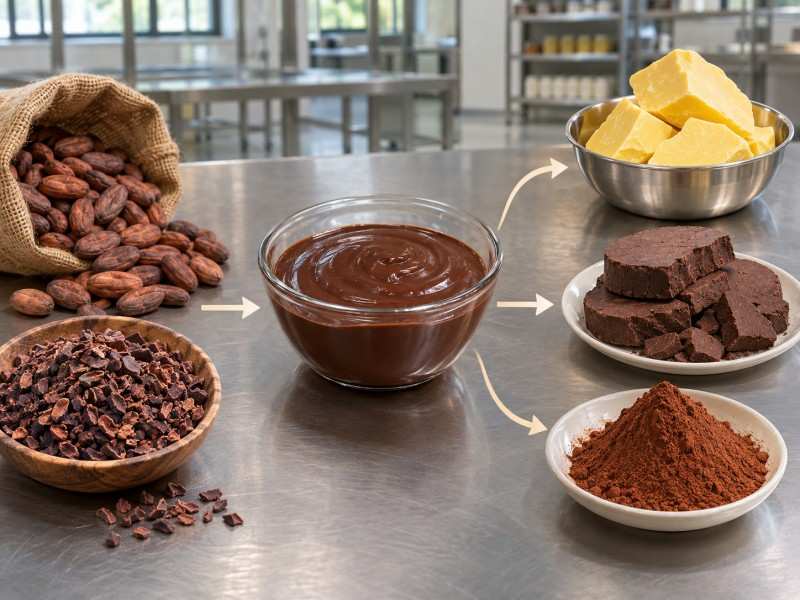
A hydraulic cocoa butter press is often part of a complete cocoa processing line. Its capacity and configuration should match the upstream and downstream equipment.
A typical cocoa processing workflow includes:
- Cocoa bean cleaning and sorting.
- Cocoa bean roasting.
- Cracking and winnowing.
- Cocoa nib grinding.
- Cocoa liquor storage and temperature control.
- Hydraulic cocoa butter pressing.
- Cocoa butter collection and filtration.
- Cocoa cake crushing and grinding.
- Cocoa powder processing and packaging.
When selecting equipment, check whether its feeding capacity, discharge arrangement, and processing speed match the rest of your production line.
Proper equipment integration helps reduce material handling, prevent production bottlenecks, and improve overall processing efficiency.
Evaluate Maintenance, Safety, and Operating Costs
Beyond initial purchase costs, long-term maintenance and operating expenses should also influence your decision.
Consider the following key factors:
| Factor | What to Check |
| Hydraulic System | Pump, cylinder, valves, pipelines, and seals |
| Safety Protection | Pressure protection, emergency stops, and safety interlocks |
| Cleaning | Accessibility of the pressing chamber and filtration components |
| Spare Parts | Availability of hydraulic components and replacement parts |
| Technical Support | Installation, operator training, and after-sales service |
Regular hydraulic oil inspections, seal replacement, and equipment maintenance help maintain stable operation and reduce unexpected downtime.
Questions to Ask Before Purchasing
Before making a final decision, discuss your production requirements with the equipment manufacturer.
The following checklist can help you compare different hydraulic cocoa butter press models.
| Selection Factor | Questions to Ask |
| Capacity | How much cocoa liquor can be processed per batch? |
| Pressure | What are the rated hydraulic pressure and pressing force? |
| Efficiency | What are the expected butter recovery and cake fat content? |
| Operation | Is it manual, semi-automatic, or automatic? |
| Output | What is the actual processing capacity per hour? |
| Materials | Are product-contact components made of food-grade materials? |
| Customization | Can the machine be adjusted to meet specific production requirements? |
| Support | Are installation guidance and spare parts available? |
If possible, request a pressing test using your actual cocoa liquor. This helps verify equipment performance under your specific processing conditions.
Choose a hydraulic cocoa butter press based on pressing capacity, pressure, operation, and production output. Small manufacturers may prefer simple, cost-effective models, while larger facilities may require higher-capacity automated machines. Ensure the equipment matches your cocoa liquor, butter recovery targets, and production needs to improve efficiency and support long-term operation.