
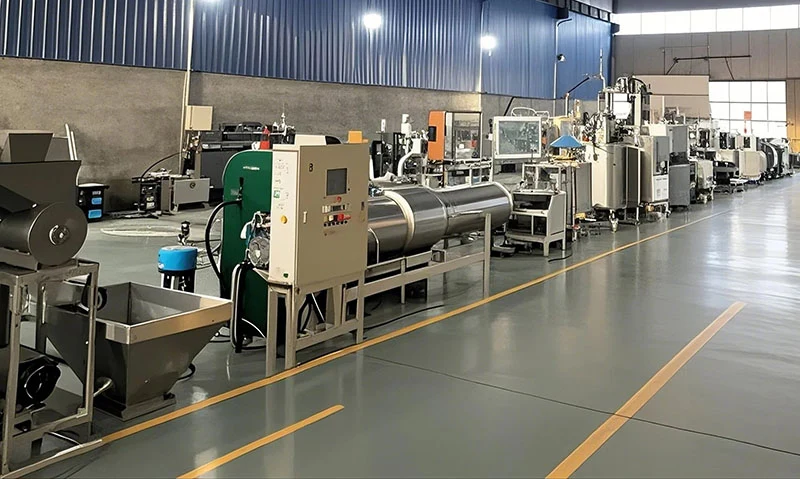
A tomato processing line seasonal shutdown should finish with verified cleaning, equipment-specific preservation, a repair plan, and a documented restart sequence. Remove product residues, establish the required storage condition for each machine, protect exposed interfaces, and assign inspections throughout the idle period.
Before the next tomato campaign, restore the line in stages: review its condition, close maintenance work, confirm utilities and controls, complete the required cleaning and hygiene checks, then verify production performance.
Use the installed equipment manuals to define preservation methods rather than applying one storage treatment to the whole factory.
How Seasonal Shutdown Differs from A Routine Stop
A routine stop leaves equipment close to its next operating condition. An off-season shutdown may involve weeks or months of inactivity, maintenance access, disconnected services, and changes in staffing.
| Planning Item | Routine Stop | Seasonal Shutdown |
| Expected duration | Short and relatively predictable | Longer, sometimes dependent on crop availability |
| Equipment condition | Prepared for the next scheduled run | Prepared for storage and controlled maintenance |
| Inspection | Checks associated with normal operation | Assigned inspections during the idle period |
| Repairs | Limited work within a production schedule | Planned overhaul, parts replacement, or modification |
| Restart | Established operating procedure | Condition review and staged readiness approval |
Define the shutdown boundary before the final production day:
- List the machines, product circuits, and utility interfaces included.
- Identify systems that remain active, such as required building services.
- Record the expected idle period and environmental conditions.
- Assign production, maintenance, quality, and contractor responsibilities.
- Set a target date for completing repairs before incoming fruit arrives.
The broader operational pressures are discussed in Vortech’s tomato processing plant challenges guide.
Complete Final Cleaning And Verify The Results
Do the final product removal and cleaning while the line is still in a condition that supports its approved cleaning procedure. Record the result before dismantling equipment or changing its configuration.
| Cleaning Task | Evidence to Keep |
| Recover or remove remaining product | Product disposition and affected equipment |
| Execute the approved cleaning sequence | Circuit, cleaning conditions, operator, and completion record |
| Check accessible product-contact areas | Findings from the defined inspection points |
| Confirm the final rinse endpoint | Results against the site’s approved acceptance method |
| Investigate persistent deposits | Location, photographs, corrective work, and recheck |
| Establish the preservation condition | Equipment-specific method and responsible person |
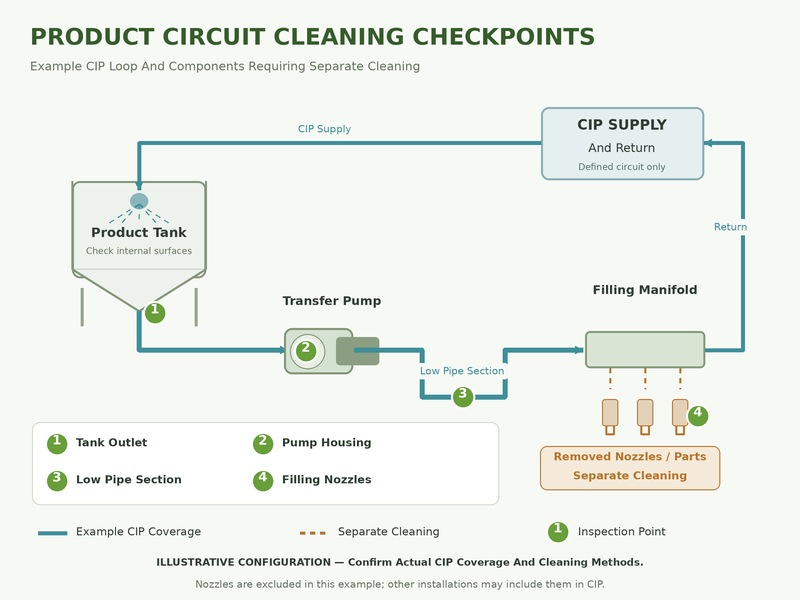
Check Areas That Can Retain Product
- Pump housings, valve cavities, and low points in pipework.
- Pulper screens and places where skins or seeds accumulate.
- Heat-transfer surfaces and evaporator discharge sections.
- Mixing-tank outlets, scraper assemblies, and sampling points.
- Filling nozzles and components excluded from a particular CIP circuit.
Use the documented cleaning parameters suitable for the installed materials and equipment. A completed cycle record does not establish that every disconnected or manually cleaned component was included.
For evaporator deposits, see Vortech’s scaling and fouling guide. Treat unresolved deposits as recorded work, not as a problem to rediscover at start-up.
Cleaning at season-end does not establish hygiene readiness months later. Include the required pre-production cleaning and hygiene verification in the restart plan.
Prepare Each Equipment Group for Storage
Tomato processing equipment preservation depends on construction, seals, lubricants, controls, and the storage environment. Drainage and drying may suit some circuits; other components require a different manufacturer-defined lay-up condition.
| Equipment Group | Preservation Review | Restart Requirement to Record |
| Washers, sorters, and conveyors | Remove debris; inspect belts, chains, and approved lubrication needs | Reassembly, guarding, tension, and operating checks |
| Crushers and pulpers | Clean screens and internal components; identify removed parts | Screen condition, fastening, clearances, and rotation checks |
| Tanks and product piping | Confirm drainage or other specified storage condition; protect openings | Remove temporary closures and verify the intended circuit |
| Pumps and valves | Follow seal, elastomer, lubrication, and storage instructions | Confirm assembly and permissible conditions before operation |
| Preheaters and evaporators | Review product and service circuits separately | Confirm cleaning, leaks, instruments, and service readiness |
| Filling equipment | Protect product-contact parts and format components | Refit parts, verify settings, and test the package |
| Motors and controls | Review humidity protection and manufacturer storage requirements | Authorised electrical and control checks |
Label Temporary Changes So They Can Be Reversed
- Tag disconnected hoses, removed instruments, and stored format parts.
- Identify temporary covers, blanks, and preservation materials.
- Keep removed parts with their equipment references and storage locations.
- Record any maintenance-related software or setpoint changes.
- Add every restoration task to the restart work list.
Do not coat product-contact surfaces with unspecified protective materials. Record any approved preservation treatment and the procedure for removing it before food production.
Pressure equipment, boilers, and specialist utility systems need their own lay-up procedures. Include their readiness in the programme without assuming the product-line checklist covers their maintenance requirements.
Inspect Wear Parts And Schedule Off-Season Repairs
Use operating records from the completed campaign to decide what needs attention. Recurring leakage, vibration, filling variation, or declining heat-transfer performance should lead to an inspection task with a clear completion requirement.
| Component or System | Review Before Ordering Parts |
| Pulper screens and crushing components | Wear, damage, required geometry, and material specification |
| Pump seals and valve elastomers | Installed variant, compatibility, and failure history |
| Scrapers and agitators | Condition, attachment, clearances, and supplier limits |
| Bearings and drive components | Inspection findings, lubrication history, and confirmed part identity |
| Instruments | Calibration status, damage, and replacement configuration |
| Filling and sealing components | Format requirements, wear, and package-test results |
Prioritise work by production consequence, lead time, and repair access. Separate confirmed replacements from items that still need inspection; otherwise a large parts order can leave the actual fault unresolved.
For each repair, record the work performed, parts installed, checks completed, and remaining restrictions. Equipment replacement decisions can also draw on Vortech’s new and used line comparison.
Build A Preservation Register And Inspection Schedule
A preservation register should describe each machine’s actual condition. “Shut down” is insufficient when one unit is dismantled, another is isolated, and a third remains connected to a service.
| Register Field | Information Required |
| Equipment identity | Tag, description, manufacturer, and applicable manual |
| Cleaning status | Completion date, findings, and verification record |
| Preservation method | Approved condition, actions taken, and environmental requirements |
| Isolation and access | Controlled status and responsible personnel |
| Removed components | Part identity, quantity, and storage location |
| Open work | Defects, repair order, parts requirement, and completion date |
| Inspection plan | Tasks, interval, owner, and escalation criteria |
| Restoration | Steps and evidence required before release |
Set inspection intervals from the manuals, environment, and equipment condition. Increase attention after water ingress, building leaks, unexpected humidity, or disturbance by contractors.
Inspection should have a defined response. If a cover is damaged or moisture appears, record the event, assess affected equipment, correct the cause, and update its preservation status.
Monitor The Line during The Idle Period
The off-season inspection route should be short enough to complete consistently and specific enough to identify a changed condition.
- Check for leaks, condensation, corrosion, damaged covers, and pest activity.
- Confirm stored parts remain labelled and protected.
- Check that temporary closures and service arrangements remain as recorded.
- Review authorised maintenance access and changes to the equipment.
- Follow prescribed checks for lubrication or movement of components where applicable.
- Record findings, corrective actions, and the next inspection date.
Keep idle-period inspections separate from permission to energise machinery. Any powered test requires the approved work procedure, appropriate operating conditions, and control of the surrounding area.
Restart in Stages before The Next Tomato Campaign
Begin the restart while there is still time to correct defects without delaying fruit processing. Passing one stage should release the next defined activity, rather than authorising unrestricted production.
| Stage | Required Checks | Release Evidence |
| 1. Condition review | Preservation history, inspections, and outstanding work | Updated equipment-status list |
| 2. Mechanical restoration | Reassembly, temporary materials removed, guards and service access restored | Completed restoration and maintenance records |
| 3. Utility readiness | Required electricity, water, steam, air, drainage, and other services | Confirmed requirements at equipment interfaces |
| 4. Controls and instrumentation | Configuration, calibration, alarms, and approved interlock checks | Recorded results and closed defects |
| 5. Cleaning and hygiene | Required cleaning, sanitising where specified, and verification | Quality release for the intended operation |
| 6. Functional trials | Permitted test medium, sequence, leaks, flow, and equipment response | Approved trial record |
| 7. Product trial | Representative feed, process performance, and package checks | Acceptance against agreed production criteria |
Use Test Conditions Appropriate to Each Machine
- Confirm allowable test conditions with the equipment instructions.
- Do not assume pumps, seals, or product-contact assemblies can run dry.
- Review the trial sequence across connected machines before starting.
- Record changes made during testing and repeat affected checks.
- Reconcile product and cleaning requirements after the trial.
Hold equipment with unresolved faults outside the released operating scope. Record who approves restoration of energy sources and how that approval connects to maintenance close-out.
Confirm Production Readiness before Receiving Fruit
- Preservation materials and temporary arrangements have been accounted for.
- Repairs are complete, or restrictions have an approved resolution.
- Utilities, controls, instruments, and product circuits have been checked.
- Cleaning and hygiene evidence covers the restored configuration.
- Product trials meet the agreed process and packaging requirements.
- Operators have current procedures and understand any modifications.
- Parts, service contacts, and the start-up response plan are available.
For a seasonal inspection, repair, or upgrade enquiry, send Vortech your equipment list, previous-season faults, planned restart date, and proposed changes through the project enquiry page. Include existing manuals and maintenance records so the review can focus on the installed line.