
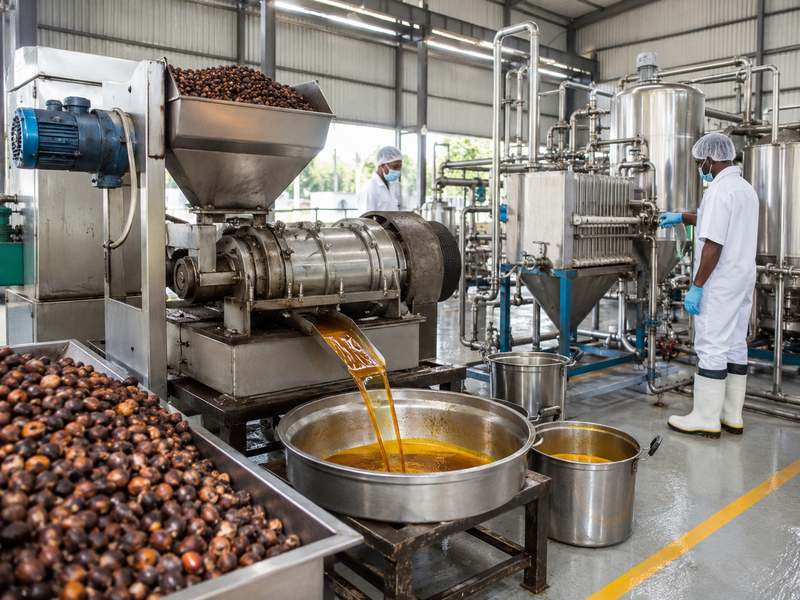
Common Problems in Palm Kernel Oil Extraction and Solutions
Palm kernel oil extraction is profitable when the plant runs efficiently, but problems like low oil yield, high residual oil in cake, blockage, poor oil quality, downtime, and unstable production can reduce profit. These issues are often caused by raw material quality, moisture, cleaning, crushing, cooking, pressing, filtration, maintenance, and operator control. Proper pretreatment, such as cleaning, magnetic separation, crushing, flaking, and steam conditioning, helps protect screw presses, reduce downtime, improve oil recovery, and produce cleaner crude palm kernel oil. Common Problems at Each Processing Stage Processing Stage Common Problem Main Cause Recommended Solution Raw kernel receiving Unstable oil yield Mixed-quality kernels, old kernels, high moisture Build a raw material inspection system Cleaning Press damage and downtime Stones, metals, shells, sand Use vibrating screen and magnetic separator Crushing Poor oil release Kernels are too large or unevenly crushed Adjust crusher gap and blade condition Flaking Low extraction efficiency Flakes too thick or irregular Control flake thickness and roller pressure Cooking/conditioning Oil yield fluctuation Wrong temperature, moisture, or retention time Use controlled steam cooking Pressing High residual oil in cake Worn screw shaft, wrong feeding speed, low pressure Replace wear parts and adjust press settings Clarification Cloudy crude oil High fines and poor filtration Use settling tank, screen, filter press Storage High FFA and poor oil quality Moisture, heat, long storage time Use clean dry tanks and fast processing Problem: Low Oil Yield Low oil yield is one of the most serious problems in palm kernel oil extraction. It directly affects profit. If the plant processes 50 tons of palm kernels per day, even a 1% loss in oil recovery can mean hundreds of kilograms of oil lost daily. Common causes include poor kernel quality, high moisture, insufficient crushing, poor flaking, incorrect cooking, worn screw press parts, or unstable feeding. Palm kernels must be properly prepared before pressing. FAO states that kernel fragments are normally flaked to increase surface area, and flaking helps rupture the cell walls before cooking and pressing. Solutions First, test kernel moisture before production. Oklahoma State University notes that palm kernels are dried in silos with hot air to below 7% moisture before oil is expelled by pressing or hexane extraction. If kernels are too wet, the press may slip, the cake may become soft, and oil separation becomes difficult. If kernels are too dry, the material may become too hard and increase wear. Second, improve crushing and flaking. The kernel should not enter the press as whole or large pieces unless the plant is designed for direct pressing. Better size reduction increases surface area and improves oil release. Third, control cooking temperature and moisture. FAO gives a typical cooking reference of about 104–110°C and around 3% moisture in palm kernel meal before pressing. Poor cooking reduces oil flow and increases residual oil in cake. Problem: High Residual Oil in Palm Kernel Cake Palm kernel cake is an important by-product used mainly in animal feed. However, if the cake contains too much residual oil, the plant is losing oil revenue. High residual oil may come from low pressing pressure, worn press worms, incorrect choke adjustment, poor pretreatment, or excessive feeding speed. Symptom Possible Cause Solution Cake feels oily Press pressure too low Adjust cake outlet/choke mechanism Cake is too thick Discharge gap too wide Reduce discharge gap carefully Cake is powdery but oily Poor cooking or flaking Improve conditioning and flake thickness Oil yield drops gradually Screw shaft or cage wear Inspect and replace wear parts Motor overloads during pressing Feeding too fast or material too dry Reduce feeding speed and adjust moisture Cake color too dark Overheating Improve cooling and reduce friction temperature For small mechanical pressing plants, double pressing may be used to improve oil recovery. FAO notes that direct screw pressing without pretreatment often requires double pressing for efficient extraction. Problem: Press Blockage and Machine Jamming Palm kernel press blockage is common in small and medium oil mills. It can stop production, damage the screw shaft, overload the motor, and increase labor cost. Blockage usually happens when the material is too wet, too large, mixed with shell pieces, or fed too quickly. Main Causes The first cause is poor cleaning. Stones, metal pieces, and hard shell fragments can enter the pressing chamber and damage the cage or screw. The second cause is unstable feeding. When operators feed too much material at once, the press cannot build stable pressure. The third cause is incorrect material conditioning. Wet kernels may become sticky, while overly dry kernels can create excessive friction. Solutions Install a magnetic separator and vibrating screen before crushing. Train operators to feed continuously instead of suddenly overloading the machine. Check the press current regularly. If the current rises sharply, stop feeding and inspect the chamber before serious blockage occurs. Problem: Dark Oil Color or Burnt Smell Palm kernel oil may become dark or smell burnt when the temperature is too high during cooking or pressing. High friction inside the screw press can also increase temperature. FAO explains that press worm shafts are cooled with circulating water, while the barrel may be cooled externally to prevent extreme temperatures that could damage oil and cake quality. Cause Effect on Oil Corrective Action Cooking temperature too high Darker oil color Reduce steam pressure Long retention time Burnt odor Shorten cooking time Screw press overheating Poor oil quality Check cooling water Excessive friction High motor load Inspect screw and cage clearance Old kernels High FFA, poor smell Improve raw material storage The solution is not simply to reduce all heat. Palm kernels need proper conditioning to release oil efficiently. The goal is controlled heating, not undercooking or overheating. Problem: Cloudy Crude Palm Kernel Oil Freshly expelled crude palm kernel oil usually contains fines, foots, and small solid impurities. This is normal, but poor clarification can make the oil too cloudy for storage or sale. According to FAO, expelled oil should pass through a reservoir, decanter or coarse screen, and then a filter press to remove remaining solids