
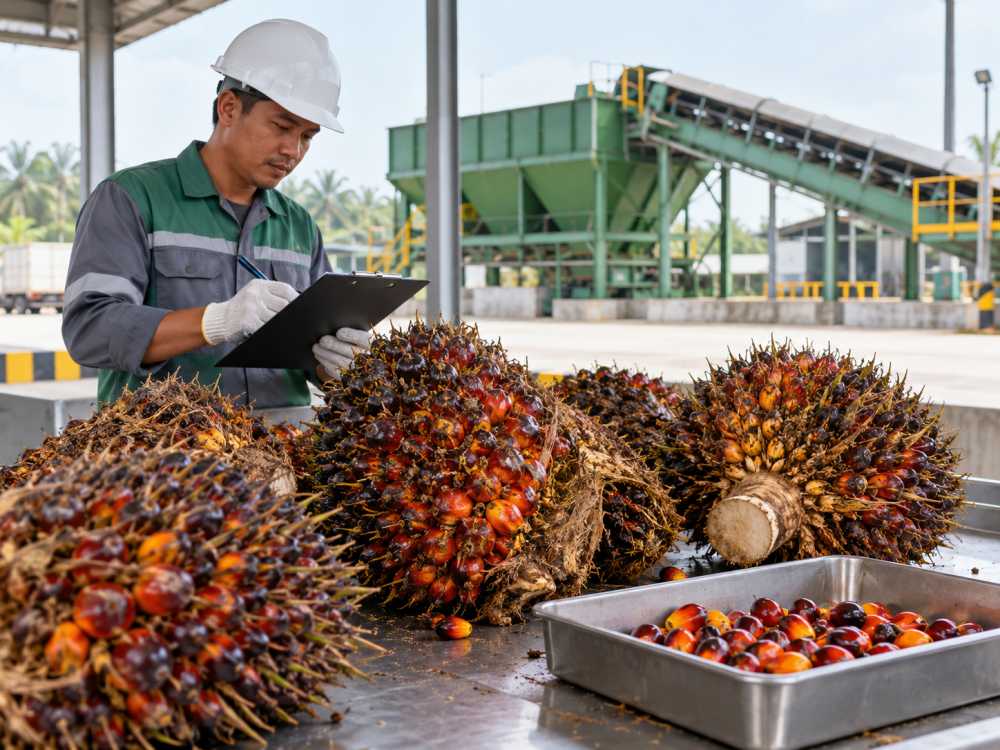
Palm oil FFB grading at mill reception should check ripeness, fruit damage, contamination, loose-fruit condition, and delivery history before a load joins the processing queue. Use a representative sample, written acceptance criteria, and a load-linked record to decide whether to accept, reinspect, hold, or reject the delivery.
The checklist below helps turn those checks into a repeatable receiving procedure. Set grade definitions and acceptance limits against the applicable local standard and supply agreement; a visual inspection cannot establish the oil content or free fatty acid level of an entire load.
Why FFB Grading Matters Before Processing
Fresh fruit bunch quality affects what the mill can recover and the condition of the resulting crude oil. Grading gives operators information before different deliveries become mixed, when a receiving decision is still possible.
Use grading to:
- Identify immature or deteriorated material before it enters the common feed stream.
- Flag bruising and delays that warrant closer quality investigation.
- Keep soil, stones, metal, and excess plant debris out of handling equipment.
- Recover loose fruit without mixing it with sweepings or rejected material.
- Give suppliers documented feedback instead of an unexplained complaint about oil yield.
Reception inspection should therefore cover the journey as well as the fruit itself.
Establish Grade Definitions Before Deliveries Arrive
“Good fruit” is too vague for a purchase specification. Receiving staff and suppliers need the same description of an acceptable bunch, including how borderline findings will be reviewed.
| Criterion | Define Before Receiving | Evidence to Keep |
| Ripeness | Categories and assessment method under the adopted standard | Counts by category and reference photographs |
| Physical damage | How bruised, crushed, or heavily damaged material is recorded | Defect observations and photographs |
| Contamination | Unacceptable contaminants and permitted handling actions | Type, location, and measured quantity where practical |
| Delivery history | Required harvest and transport information | Declared times, arrival time, and missing information |
| Loose fruit | Inspection, weighing, and acceptance arrangements | Condition, source, weight, and load reference |
| Disputed result | Reinspection method and approval responsibility | Original finding, review result, and final decision |
Agree these rules before discussing price adjustments. Apply only the adjustments established in the supply agreement and retain the basis for any deduction.
Use Local References for Ripeness Assessment
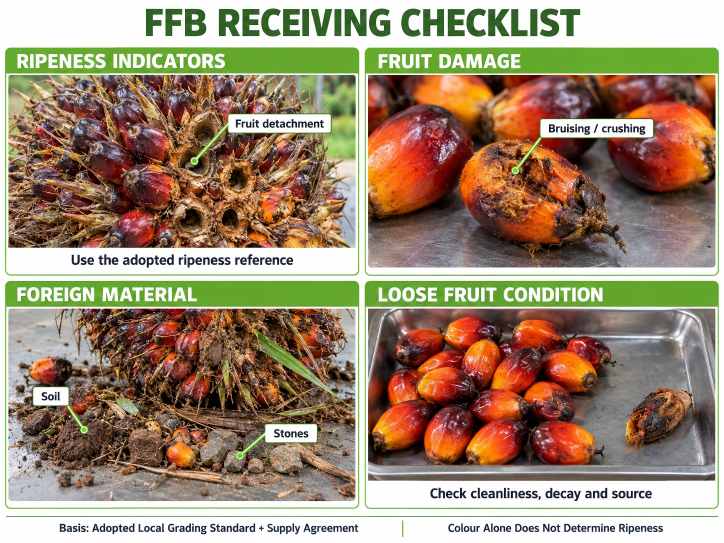
- Use several prescribed indicators rather than fruit surface colour alone.
- Distinguish detached fruit sockets on a bunch from loose fruit delivered separately.
- Train graders using actual fruit from the mill’s supply area.
- Check whether reference photographs remain useful under receiving-area lighting.
Apply the current grading method adopted for your operation rather than importing an isolated threshold.
What to Inspect in Each Incoming Load
Check the delivery documents first, then inspect the sampled material. Keep missing information separate from an observed defect: an unknown harvest time is not proof that the fruit is stale.
| Inspection Item | What to Look For | What to Record |
| Ripeness | Categories identified using the agreed grading method | Sample size and count in each category |
| Damage | Crushed fruit, bruising, and evidence of rough handling | Affected material and defect description |
| Deterioration | Mould, decay, abnormal odour, or other visible changes | Findings, photographs, and review decision |
| Foreign material | Soil, stones, metal, rubbish, or excess debris | Contaminant type and extent |
| Loose fruit | Cleanliness, damage, deterioration, and source identity | Separate condition assessment and weight where measured |
| Bunch presentation | Stalk condition and other requirements in the grading specification | Nonconformities against that specification |
| Delivery history | Harvest declaration, journey, arrival, and unloading times | Known times, estimated times, and uncertainties |
Visual findings guide acceptance and investigation. If oil quality needs confirmation, use an agreed sampling and laboratory procedure; do not assign an FFA value from colour, odour, or delivery age alone.
How to Build a Representative Sampling Procedure
Fruit visible at the top of a truck may not represent the delivery. Plan where and when samples will be selected, and keep selection independent of the driver’s preferred bunches.
- Identify the load.Link the vehicle, supplier, weighbridge ticket, and inspection record.
- Define the sampling unit.State whether results describe bunches, loose fruit, or another separately assessed stream.
- Set the sample size.Follow the adopted standard, then document any additional checks for mixed or suspect loads.
- Spread selection across the load.Use planned points during controlled unloading to cover different portions where the receiving arrangement permits.
- Inspect consistently.Apply the same definitions and record every selected unit, including acceptable material.
- Keep the denominator.Report category counts together with the number inspected.
- Document exceptions.Record inaccessible portions, interrupted unloading, or other limitations.
Keep Sample Results Separate from Whole-Load Claims
For example, if 8 of 80 inspected bunches fall into a defined category, that category represents 10% of the inspected bunches. It does not automatically represent 10% of delivery weight.
- Label whether a result is based on bunch count or measured mass.
- Do not convert count percentages into weight deductions without an agreed method.
- Reinspect when the sample reveals substantial variation or the supplier disputes the finding.
Select samples at a designated stationary inspection point. Keep people outside vehicle, ramp, and conveyor operating zones; do not climb loaded vehicles or reach into moving material to obtain a sample.
How to Handle Mixed or Off-Spec Loads
An inspection is useful only if staff know what happens next. Give each disposition a responsible person, a physical destination, and a recorded reason.
| Finding | Receiving Action | Required Follow-Up |
| Meets agreed criteria | Accept and release | Link the grade result to the receiving ticket |
| Borderline or disputed grade | Reinspect before final disposition | Record both inspections and reviewer approval |
| Mixed quality within the load | Expand inspection or segregate where practical | Document variation and the agreed treatment |
| Suspected contamination | Hold outside the common feed stream | Identify the contaminant and determine disposition |
| Delayed delivery with no disqualifying defect | Review condition and processing priority | Confirm acceptance and communicate queue instructions |
| Fails acceptance criteria | Reject or use another formally approved disposition | Record authorisation and prevent accidental mixing |
Priority processing applies to accepted material. It does not make contaminated or otherwise unacceptable fruit suitable for the normal line.
Define a maximum review period so held loads do not remain unresolved. If unloading has already occurred, mark the holding area and reconcile its contents with the load record before release.
What Equipment Supports Receiving Inspection?
Receiving equipment should make grading accessible without creating another bottleneck. Specify inspection space, visibility, material identity, and loose-fruit recovery alongside unloading capacity.
| Equipment or Facility | Inspection Function | Design Question |
| Weighbridge or suitable receiving scale | Establishes gross, tare, and net delivery weight | Can weight records be linked reliably to the inspected load? |
| Controlled unloading ramp or receiving hopper | Allows observation during unloading | Where can material be assessed without entering a moving zone? |
| Designated inspection area | Supports repeatable checks | Is lighting adequate, with room for reference checks? |
| Holding or segregation area | Keeps unresolved material identifiable | How will mixing and accidental feeding be prevented? |
| Loose-fruit collection arrangement | Recovers detached fruit | Can accepted fruit be kept separate from floor waste? |
| Recording station | Captures findings and decisions | Can staff record results without losing load identity? |
Vortech’s 30 T/H FFB unloading ramp project provides an example of a receiving-system upgrade. For a new installation, review the grading arrangement together with the unloading and feeding layout.
How to Connect Grading Records with Mill Performance
Keep one load-linked record from arrival through disposition. Once accepted fruit enters a shared hopper, individual-load identity may be lost; record that mixing boundary instead of claiming exact traceability beyond it.
Minimum Receiving Record
- Supplier, origin, vehicle, and load identification.
- Gross, tare, and net weight, with loose-fruit weight identified where measured separately.
- Declared harvest time, arrival time, inspection time, and unloading time.
- Sampling method, sample size, category counts, defects, and photographs.
- Grader, reviewer where applicable, final disposition, and supplier notification.
- Release time and processing batch or time window where traceable.
Review these records alongside production information:
| Receiving Trend | Production Comparison | Follow-Up Question |
| Changing ripeness mix | Oil extraction rate across comparable periods | Did raw-material composition or operating conditions change? |
| More damaged or delayed fruit | Laboratory oil-quality results | Is handling or transport contributing to deterioration? |
| More contaminants | Handling interruptions and cleaning records | Which supply route needs corrective action? |
| Longer receiving queues | Arrival pattern and productive processing hours | Is inspection, unloading, or processing constraining flow? |
Use comparable periods and note fruit mixing, operating changes, and measurement boundaries. Grading describes incoming material; it cannot alone prove the cause of a yield change.
For queue planning, see sizing palm oil equipment for seasonal FFB supply. For downstream checks, see preventing oil loss in palm oil production.
Check Receiving Readiness Before the Next Delivery
- Grade definitions and acceptance limits are available to staff and suppliers.
- The sampling procedure states selection points, sample size, and result basis.
- Weighing, inspection, and disposition share one load reference.
- Held material has an identified location and release authority.
- Loose fruit can be collected without mixing with waste.
- Graders have reference examples and a documented reinspection route.
- Queue instructions reach the unloading and production teams.
Planning a new reception station or an upgrade? Send Vortech your vehicle types, peak arrival rate, delivery quality concerns, and existing layout through the project enquiry page. These details help define an arrangement that supports both inspection and steady feeding.